


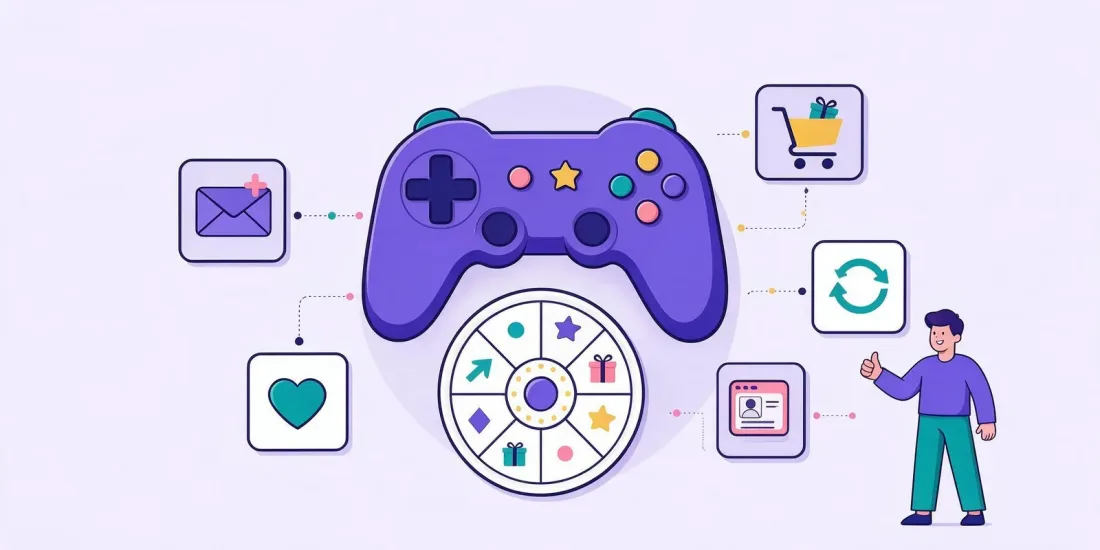
The main benefits of gamification in marketing are more sign-ups and marketing consent, better data about what customers want, more attention and return visits, and more sales through prizes such as discount codes. It works because a game gives people a reason to act now and a small reward for doing it. It doesn't work when the prize attracts the wrong people, or when nobody follows up after the game.
Gamification marketing means adding game elements, like a scratch card, a wheel or a quiz, to a campaign. People play to win a prize, and the brand gets their email, consent and answers.
Below are ten advantages of gamification marketing, each backed by a real result from a named customer where we have one. Then come the limits, because a game is not the right tool for every job.
1. More sign-ups and marketing consent
This is the benefit most brands start with. A form that says "sign up for our newsletter" asks for something. A game that says "play to win" offers something first.
- Dansk Outlet's Easter scratch card got 13,000 sign-ups from 16,000 visitors, an 81% conversion rate.
- Wolt's Christmas mystery box campaign boosted marketing permissions by 150%.
- POWER's Black Friday wheel brought in 60,000 new email permissions.
Consent is part of the sign-up form, so people agree before they play. See how collecting sign-ups works in Scratcher.
2. Zero-party data: people tell you what they want
A quiz, a personality test or a product finder asks questions people are happy to answer, because the answers lead to a result or a prize. That is zero-party data: information customers give you on purpose.
- BON'A PARTE used an outfit game to collect first-party data for personalised after-sales emails.
- Toyota Denmark built a data engine on quizzes and surveys with 285,000+ participations, 1,274 test drives and 2,591 quote requests.
3. Lower cost per lead
When more people convert, each lead costs less, especially if you pay for the traffic.
- BOBO's wheel of fortune reached its lowest-ever cost per lead: €0.18.
- Yuaia Haircare lowered its lead price by around 50% with wheels, scratch cards and a personality test.
- EYDA's brand quiz cut its cost per lead by 35%.
4. Attention and interaction
A banner gets a glance. A game gets a tap, a spin and a moment of suspense. People spend that moment with your brand, your products and your message.
- Toyota's Christmas calendar had 25,241 unique participants who opened 450,375 doors.
- DCC Energi's campaigns reached a 76.2% interaction rate.
Why this works comes down to curiosity, reward and a little suspense. Our guide to the psychology of gamification explains it.
5. Repeat visits
Some formats are built to bring people back: a calendar with a new door every day, a daily play limit or a leaderboard.
- Toyota's calendar participants came back 18 of 24 days.
- Jacobsen Møbler ran gamified campaigns all year and grew its loyalty club from 25,000 to around 120,000 members.
6. More sales and discount use
A discount code won in a game feels earned, not handed out. Many brands give everyone who doesn't win the main prize a code, so every player has a reason to shop.
- Burger King's mystery box sampling campaign had a 45.5% coupon redemption rate and 9% more Whopper orders.
- Rascals' branded wheel lifted order volume by 35% and delivered a 259% ROI.
- Rito.dk's five-day Valentine's wheel drove over €13,500 in revenue.
To work out your own return, use our gamification ROI guide.
7. Subscribers who stay
A worry with competitions is that people sign up for the prize and leave. It depends on the prize and the follow-up, but it doesn't have to happen.
- Whiteaway's advent calendar won new subscribers, and 82% were still subscribed six months later, with a 20% higher order value.
8. Brand awareness and explaining things
A quiz can teach people something without feeling like a lesson. That is useful for brands with a complex product or a hard topic.
- AIDS-Fondet used an inheritance quiz to raise awareness of a taboo topic, with a 60% conversion rate.
- EWII uses quizzes to explain complex topics and lifted customer logins by 60%.
To be honest: we don't have brand recall studies from these campaigns. What we can show is how many people played, signed up and learned along the way.
9. From in-store to online
A QR code on a poster, a receipt or a shelf turns a store visit into a sign-up. You get the customer's details, which a store visit alone doesn't give you.
- Deichmann links in-store posters and QR codes to online games and saw a 60% increase in leads, with a 51% conversion rate at Christmas.
- Ree Park Safari's Easter egg hunt with QR codes and animal quizzes engaged around 30% of all visitors.
10. Easy to test and improve
A game has clear numbers: views, plays, sign-ups, prizes won, codes used. That makes it easy to test one prize against another, or a wheel against a scratch card.
- Dansk Boligvurdering runs around 30 always-on quizzes and gets over 70% conversion on its top campaigns.
When gamification doesn't work
Gamification has limits, and research backs that up. Reviews find positive effects in most studies, but the effects depend on the context and can fade when the novelty wears off. Our article on gamification marketing statistics has the sources.
In marketing, these are the usual reasons a campaign falls flat:
- Prize hunters. A generic prize, like cash or a gift card anyone wants, attracts people who only want the prize. A prize linked to your products attracts people who like your brand. Our guide to better lead quality goes deeper.
- The wrong prize. Too small and nobody plays. Too big and the budget is gone. Too far from what you sell and the leads don't buy.
- No follow-up. The sign-up is the start, not the goal. Without a welcome email flow, new subscribers forget why they joined.
- Too much friction. Long forms and too many questions before the game make people leave.
- The same game every time. Novelty fades. Change the format, the prize or the season.
- Wrong goal. If you need a long B2B sales conversation, a quick spin won't do it alone. A quiz that qualifies leads may fit better.
If you decide to go ahead, our checklist on how to choose a gamification platform helps you compare tools.
Quick overview
| Benefit | Best formats | Example |
|---|---|---|
| Sign-ups and consent | Scratch card, wheel, mystery box | Dansk Outlet, 81% conversion |
| Zero-party data | Quiz, personality test, product finder | Toyota Denmark |
| Lower cost per lead | Wheel, scratch card, quiz | BOBO, €0.18 per lead |
| Repeat visits | Calendars, leaderboards | Toyota, 18 of 24 days |
| Sales | Instant win with discount codes | Burger King, 45.5% redemption |
| In-store to online | Any game with a QR code | Deichmann, +60% leads |
For more ideas, see our 30 gamification marketing examples from real brands.
FAQ
What is the biggest benefit of gamification in marketing?
For most brands it is more sign-ups with marketing consent. A game gives people a reason to share their email, and the results above show how many sign-ups one campaign can bring.
Does gamification only attract prize hunters?
Not if you choose the prize well. Prizes linked to your products, a short form and a good follow-up attract people who are interested in your brand.
Is gamification only for big brands?
No. Several of the results above come from smaller brands, like the yarn webshop Rito.dk and the brewery Rascals. You need a clear goal, a fitting prize and a way to share the game.
Try it on your own audience
The best way to see the benefits is to run a campaign. Start a free 14-day trial, no credit card needed, or book a meeting and we'll help you plan your first game.