


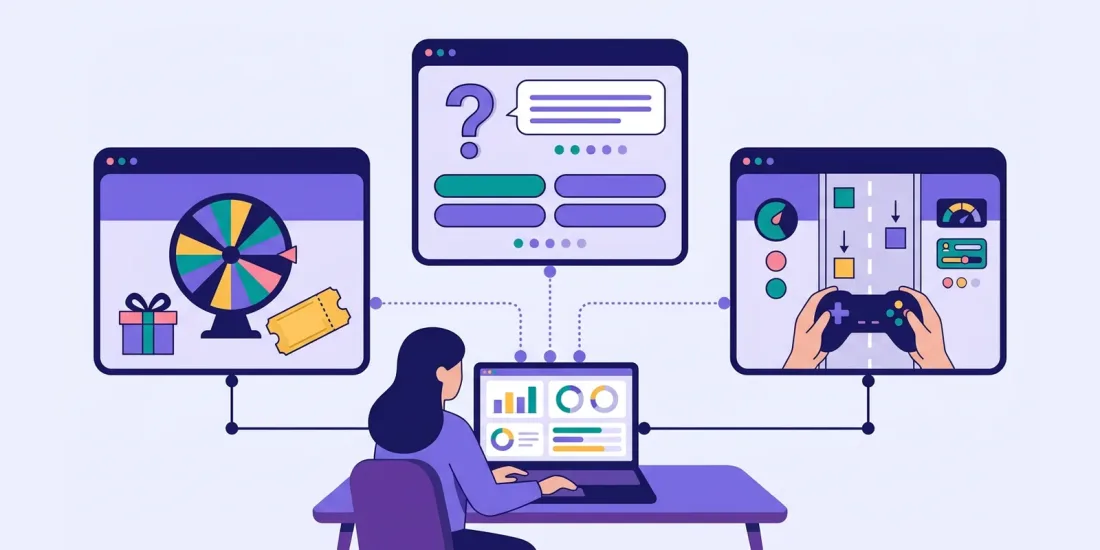
To choose the right game format, start with your campaign goal and pick one of three families. Luck games such as scratch cards and spin the wheel are best for reach and sign-ups, knowledge games such as quizzes and personality tests for education and data, and skill games such as memory or drop games for engagement time and repeat play.
Scratch card or quiz? Wheel or memory game? With 40+ formats to choose from, picking the best game for a marketing campaign can feel harder than building it. The good news: you do not need to know every format. You need to know your goal, and which of the three game families fits it best: luck, knowledge or skill.
This guide walks you through how to choose, with a simple decision matrix and real examples from brands that have done it.
Start with the goal
Before you look at any game, answer one question: what should this campaign achieve? Most campaigns have one main goal, even if they help with others too.
- More sign-ups. Grow your newsletter, SMS list or loyalty club.
- Sales. Get people to use a discount code, visit a store or try a product.
- Knowledge and insight. Learn what people like, need or plan to buy.
- Education. Teach people something about your product, brand or cause.
- Engagement. Get people to spend time with your brand and come back.
- Loyalty. Give existing customers a reason to return over days or weeks.
Then think about three practical things:
- Where will people play? A pop-up on your webshop, a link in a newsletter, a social post, a QR code in store or a big screen at an event.
- How much time do they have? Someone scrolling on the bus has seconds. Someone at a trade show stand might have minutes.
- What do you want to know about them? Just an email, or their preferences too?
With those answers in hand, the choice of game becomes much easier.
Luck games: reach and sign-ups
Formats: scratch card, spin the wheel, slot machine, mystery box, gift surprise, roll the dice, reel game, spin the bottle.
Luck games are the quickest to play. There are no rules to learn and no way to "fail". People play in seconds and see right away whether they won. That makes them the natural choice when you want as many people as possible to take part.
Choose a luck game when:
- Your main goal is sign-ups or newsletter growth.
- You want to hand out discount codes or prizes to drive sales.
- The game will run in a pop-up, where attention is short.
- You need something live fast for a season like Easter or Black Friday.
How to pick between them:
- Scratch card for a slow, satisfying reveal.
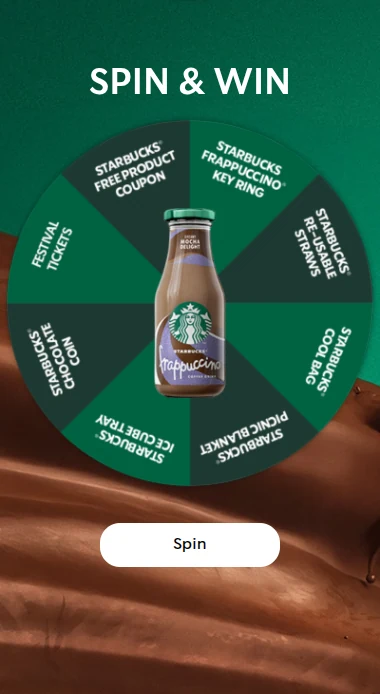
- Spin the wheel when you want people to see all the possible prizes upfront.
- Mystery box when you want people to choose their own luck, or for product sampling.
- Gift surprise when you want to say thank you, for birthdays or welcome flows.
Example: Dansk Outlet decided late to do something for Easter and chose a scratch card. Live in under a week and shared with a webshop pop-up and one organic Facebook post, it reached 16,000 unique visitors, of whom 13,000 took part, an 81% conversion rate. Read the Dansk Outlet story.
Example: Burger King used a mystery box to launch its new Whopper across Denmark and Sweden. It reached more than 140,000 unique participants, and 45.5% of the free Whopper coupons were redeemed in store. Read the Burger King story.
Knowledge games: education and qualification
Formats: quiz, video quiz, personality test, product finder, survey, guess the word.
Knowledge games ask people to think, answer or share their opinion. They take a little longer than luck games, but every answer tells you something. They work just as well for B2B as for B2C.
Choose a knowledge game when:
- You want people to learn about your product, brand or cause.
- You want to know what people like, need or plan, also called zero-party data.
- You want to qualify leads, so sales knows who to call first.
- You want to personalise your emails based on what people told you.
How to pick between them:
- Quiz to teach and test knowledge, with right and wrong answers.
- Video quiz when your story is best told with moving pictures.
- Personality test for a shareable "which one are you?" result with no wrong answers.
- Product finder to recommend products based on needs and taste.
- Survey for honest feedback and insight, one question at a time.
Example: activewear retailer EYDA ran a true-or-false brand quiz for its summer collection. Over three months it generated 12,000 leads, at €0.30 per lead from Meta, 35% cheaper than its usual ads. Read the EYDA story.
Skill games: engagement time and repeat play
Formats: memory game, drop game, hit the target, smash it, slice it, tap it, puzzle game.
Skill games give a score, and the score depends on how well people play. That makes people try again to do better, and they spend minutes rather than seconds with your brand. Add a leaderboard, and a skill game becomes a high-score competition.
Choose a skill game when:
- Your goal is brand engagement and time spent with your products.
- You want people to play more than once.
- The audience likes a challenge, for example younger people, gamers or sports fans.
- You have a physical setting, like a stand at an event or a big screen.
How to pick between them:
- Memory game to show off a product range. Everyone knows the rules.
- Drop game to catch your falling products. Easy on mobile.
- Hit the target or smash it for fast tapping action.
- Slice it for a satisfying swipe game with score levels.
- Puzzle game to put a product image together piece by piece.
Special formats: calendars, finders, polls
Some formats do not fit neatly into one family. They are built for specific situations.
- Calendars (Christmas calendar, advent calendar, campaign calendar). A new door every day or week brings people back again and again. Behind each door you can put any game. Ideal for loyalty and multi-day campaigns.
- Pre-registration. A countdown page that collects sign-ups before a campaign starts.
- Leaderboard. Turns a skill game into a competition.
- Guess the result. Fans predict the score of a match before kick-off.
- Lucky number. People guess a code. Somewhere between luck and skill, and great for code hunts across channels.
- Polls, vote game, rating game, product battle and swipe it. Quick ways to let your audience have a say and give you feedback.
Calendars, leaderboards and pre-registration are special formats, included on Professional or as an add-on.
Example: Continental Tyres ran a Christmas calendar for Danish dealers with a quiz question behind each door. 93% of visitors took part, and its B2B newsletter grew by 130%. Read the Continental story.
Decision matrix: the best game for a marketing campaign
Use this as a starting point. Pick your main goal, then look at the best fit.
| Main goal | Best fit | Also works | Why |
|---|---|---|---|
| Newsletter sign-ups | Scratch card, spin the wheel, mystery box | Personality test | Quick, anyone can play |
| Sales and code redemption | Spin the wheel, scratch card, mystery box | Lucky number | Instant prizes and unique codes |
| Product sampling | Mystery box | Gift surprise | Winners pick up the product |
| Teaching people about your brand | Quiz, video quiz | Calendar with quiz doors | Learning happens while playing |
| Customer insight | Survey, poll, rating game | Product battle, swipe it | Answers become data |
| Personalised emails | Personality test, product finder | Quiz | Answers split people into segments |
| Time with your brand | Drop game, memory game | Hit the target, slice it | Score keeps people playing |
| Repeat visits | Calendar, leaderboard | Daily play limits on any game | A reason to come back |
| Sports and events | Guess the result, quiz | Leaderboard, vote game | Built around a live moment |
A few rules of thumb:
- Pop-up? Choose something that takes seconds: a luck game or a one-question poll.
- Social media? Choose something shareable: a personality test, quiz or skill game with a score.
- Newsletter? Choose something that rewards existing fans: a calendar, a quiz or a gift surprise.
- In store or at an event? Choose something fun to watch and quick to start: a wheel or a skill game on a QR code.
Combine families for bigger campaigns
You do not have to pick only one. Many strong campaigns mix families:
- Quiz first, then a scratch card. People answer three questions about their preferences, then scratch for a prize. You get both data and a fun ending.
- A calendar with different games. A luck game on most days, a quiz on Fridays and a skill game with a leaderboard on the weekend.
- A survey with a gift. End your feedback survey with a gift surprise as a thank-you.
Keep it simple, though. Every extra step costs some players, so add steps only when they serve your goal.
Getting started
- Write down your main goal and where the campaign will run.
- Pick a family using the matrix above.
- Browse the formats on our formats page and see examples of each.
- Start from a template. There are 150+ templates, and Rex, our AI assistant, can add your logo, colours and fonts from your website and write the texts.
- Set up prizes and the form, and connect your email tool.
- Publish as a landing page, pop-up or embed, and measure.
Looking for timing ideas? Our campaign ideas page has suggestions for every season, from Valentine's Day to Christmas.
Find the right game for your next campaign
The best game is the one that fits your goal, your channel and your audience. Not the newest one, and not the one your competitor used. Start a free 14-day trial and try a few formats side by side, or book a meeting and we will help you choose.