


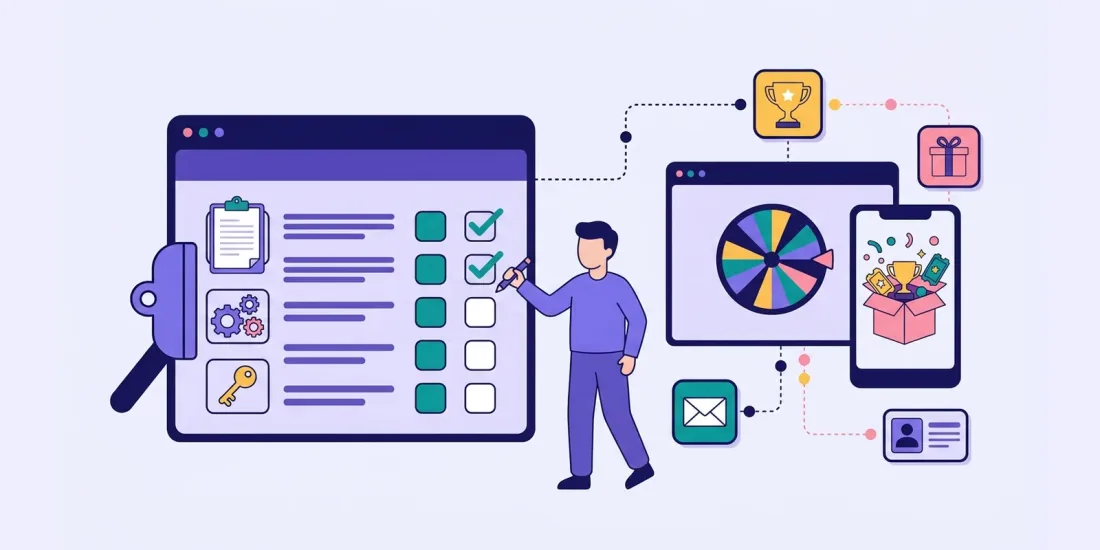
Every competition needs a set of terms, and knowing what to put in them takes time. This post gives you a checklist of the topics competition terms usually cover, so you can brief your lawyer or check a draft. Below the checklist you'll find the points that differ between instant wins and draws, tips for showing the terms in a game, and the mistakes we see most often.
Important: this is not a legal template. This post lists topics to consider. It does not contain legal wording and does not make your terms compliant with any law. Rules differ between countries and change over time, so have your terms written or reviewed by a lawyer before you launch.
What competition terms usually cover
Good giveaway terms answer the questions a participant or a winner is likely to ask. Topics people usually cover include:
- Who is running the competition and how to contact them
- Who can take part, and who can't
- When the competition starts and ends
- How to enter, and how many times
- What the prizes are and how many there are
- How winners are chosen and contacted
- How personal data is used
- What happens if something goes wrong
Which details are required, and how marketing consent relates to the terms, depends on the country and your set-up. In Denmark, the Consumer Ombudsman publishes guidance on forbrugerombudsmanden.dk that you can read before you talk to your lawyer. Read more in our guide to running online competitions in Denmark and the EU.
Checklist of topics
Use the list below to brief your lawyer or to check that a draft covers what you expect. It is a list of topics, not wording to copy.
1. Organiser
- The name of the competition
- The company running it, with contact details and company registration number
- Any social media platforms the competition is promoted on, and how the competition relates to them
2. Eligibility
- Age limits and the countries or regions people must live in
- Whether employees, partners or their families can take part
- Whether winners may be asked to confirm their age or identity
3. Dates
- Start and end date and time, including the time zone
- What happens to entries received outside the period
4. How to enter
- Where and how people enter, and which details they give
- Whether participation is free or linked to a purchase
- How many times each person can take part, and whether extra plays change the chance of winning
- Which entries are treated as invalid, for example automated or fake entries
5. Prizes
- What the prizes are, how many there are of each, and any consolation prizes
- Whether prizes can be exchanged, and how long discount codes are valid
- What happens if a prize becomes unavailable
- Who handles any tax or duty on prizes (check the current rules with your adviser)
6. How winners are chosen and contacted
- For instant wins: how results are decided and how many prizes there are in total
- For draws: when each draw happens and how winners are picked
- How and when winners are contacted, and whether winners are announced publicly
- What happens if a winner doesn't respond
7. Prize delivery
- How prizes are delivered and roughly when
- What happens if delivery fails or contact details are wrong
8. Data use
- Who is responsible for the personal data
- What the data is used for, such as running the competition and contacting winners
- How marketing consent is handled, and how people can withdraw it
- How long the data is kept, with a link to your privacy policy
9. Liability, changes and cancellation
- What happens if technical problems prevent people from taking part
- When the competition can be changed, paused or cancelled, and where changes are published
10. Contact details and governing law
- Where participants can send questions
- Which country's law applies (ask your lawyer)
Instant win vs draw
The mechanic changes what you need to explain. Here's what to check for each.
Instant win
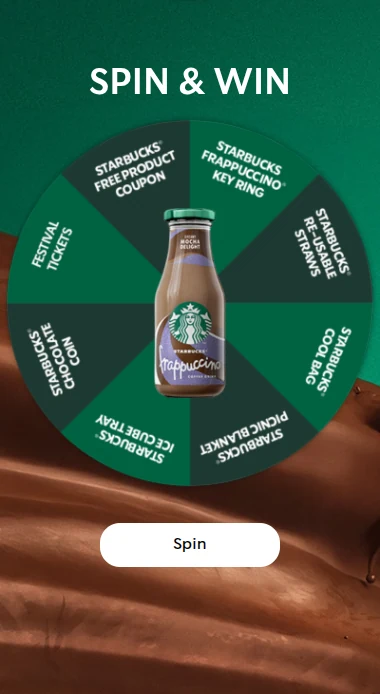
Scratch cards, wheels and mystery boxes usually tell people right away whether they've won. Consider covering:
- The total number of prizes and, if relevant, how they're spread over the period
- How results are decided when the game is played
- What happens to prizes that aren't won before the end
- Whether the game's claims match the set-up. If the page says "everyone wins", there must be a prize for everyone
Prize draw
Calendars and sign-up competitions often collect entries and draw winners later. Consider covering:
- The date of each draw and how winners are picked
- Whether one entry per person or multiple entries count
- How and when winners are contacted, and how long they have to reply
Many campaigns combine the two: an instant consolation prize for everyone, plus a grand prize draw at the end. In that case, cover both. In Scratcher, you can set up both on the prizes page: how many of each prize can be won, when they can be won and how often each person can play. Draws can run automatically on the dates you choose, and with the Email module Scratcher can send the winner emails for you.
Displaying T&Cs in a game
The best terms are useless if nobody can find them. A few tips:
- Link the terms from the entry form, next to the button people press to play.
- Keep consent separate. Many brands use one checkbox for accepting the terms and a separate, unticked checkbox for marketing consent. Check with your adviser what fits your set-up.
- Show the essentials on screen. Prize, period and organiser should be visible without opening the terms.
- Make it mobile-friendly. Most people play on a phone, so the terms must be readable there.
In Scratcher, the text next to a checkbox in the sign-up form can link to your terms, either on your own website or on a separate page inside the campaign. You write the terms yourself and are responsible for their content. Every one of our 150+ templates can be adapted this way.
Common mistakes
- Mixing up the terms and marketing consent. Accepting the terms and agreeing to marketing are two different things, so think about how you ask for each.
- Missing organiser details. Make it easy to see who is behind the competition and how to contact them.
- "Win an iPhone" with no number. Say how many prizes there are.
- No end date or draw date. People need to know when it's over and when winners are chosen.
- Tagging or sharing as an entry condition. Rules and authority views on this differ between countries, so check the current guidance before you use these mechanics.
- No data processing agreement. If a tool collects entries for you, it processes personal data on your behalf. Check that you have a data processing agreement in place. Scratcher offers one as standard, see our security page.
- Copying another brand's terms. Their prizes, markets and data set-up differ from yours.
- Forgetting tax on prizes. Prizes can have tax or duty consequences depending on the country and the prize. In Denmark, the Danish Tax Agency has information on skat.dk; check the current rules with your adviser.
Brief your lawyer and launch
Go through the checklist above, note your answers for each topic and share them with your lawyer, who can turn them into terms that fit your campaign and markets. Then host the terms on your website or add them as a page inside your campaign, and link them from the entry form.
When your terms are ready, the fun part starts. Try Scratcher free for 14 days and build your competition from a template, with prizes, draws and consent checkboxes set up the way you need.
This article is general information, not legal advice. Rules differ between countries and change over time, so check the current rules and get legal advice before you launch a campaign.