


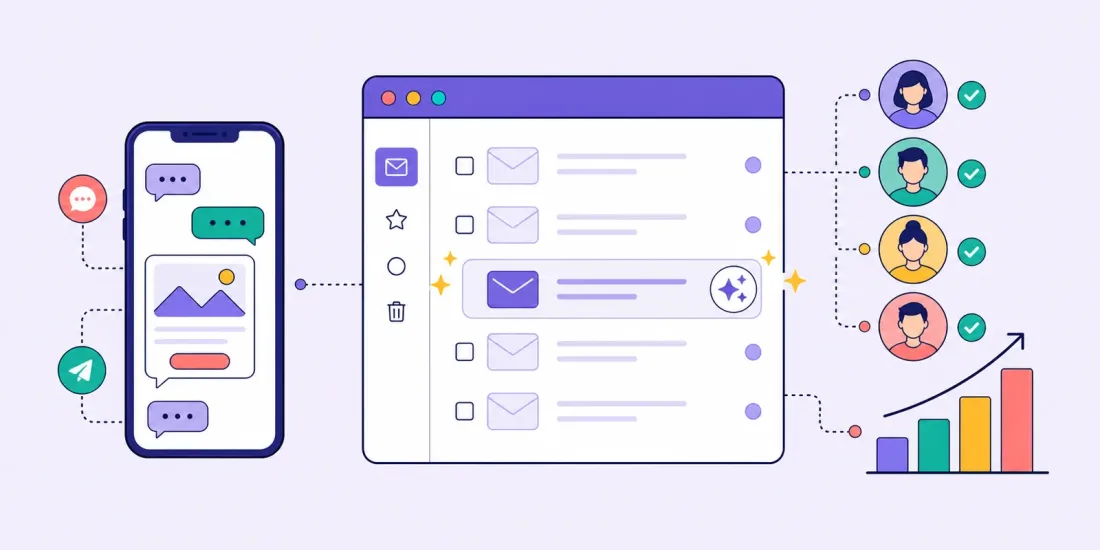
In 2027, email and SMS marketing will be judged on clicks, replies and sales, not opens. AI in the inbox summarises and sorts messages, open rates are getting less reliable, and mailbox providers reward senders whose subscribers actually engage. That makes the quality of your list more important than its size. The brands that grow will collect subscribers with a clear consent and a reason to stay, put the offer in the first lines, send fewer but more relevant messages and use richer mobile messaging where it is available.
Here is what we expect for email and SMS marketing in 2027, what is already happening, and what to change now. Every number links to its source.
The inbox is now an AI product
In January 2026, Google announced that Gmail is entering the Gemini era, with AI overviews that answer questions across the inbox, help with writing and an AI Inbox that highlights what seems important. The rollout started in the US in English, with more languages and regions to follow.
What does that mean for marketing email? Nobody outside Google knows exactly how the ranking works, and we will not pretend otherwise. But the direction is clear: the inbox is starting to decide what people see first, and it will lean on signals of real interest.
Open rates are breaking
Open rates have been unreliable since Apple's Mail Privacy Protection began loading images automatically. In 2026, Gmail added to the confusion. Validity reported in May 2026 that some of its customers saw open rates drop 30% or more from one quarter to the next, and that Gmail image loading, which includes tracking pixels, fell by roughly a third in late November 2025. Validity lists several possible causes, from fewer prefetched images to stricter enforcement and AI summaries, and says not all of them are confirmed.
Our prediction: by the end of 2027 most marketing teams will have dropped open rate as a headline KPI. It will survive as a rough health signal, while clicks, conversions, revenue per subscriber and unsubscribe rate take over.
Mailbox rules reward engaged lists
The rules for bulk senders are not new, but they are getting stricter in practice.
- Google requires senders of more than 5,000 messages a day to authenticate their mail, offer one-click unsubscribe and keep the reported spam rate below 0.30%.
- Microsoft began routing mail from high-volume senders that fail SPF, DKIM and DMARC checks to the junk folder from May 2025, with rejection to follow.
A list full of people who never wanted your emails is now a technical risk, not just a waste. Every complaint counts against you. Every subscriber who signed up on purpose counts for you.
7 email and SMS marketing trends for 2027
1. List quality beats list size
The old goal was a bigger list. The 2027 goal is a list where people expect and want your messages. That changes how you grow it: fewer bought or borrowed contacts, fewer pre-ticked boxes, more sign-ups where people knew what they agreed to.
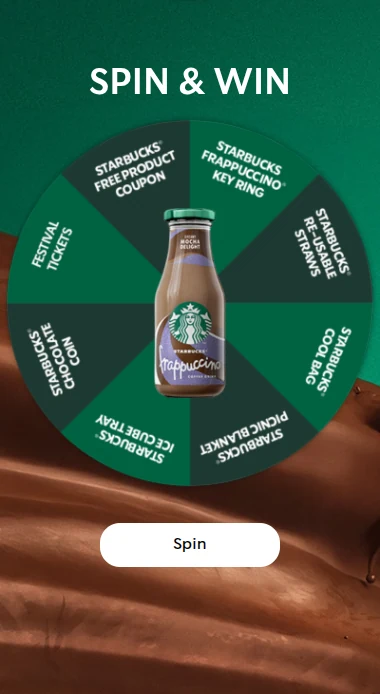
A game is one of the best ways to do this, because the exchange is clear: play, maybe win, and get the newsletter if you say yes. Our guide to growing your email list with gamification shows how, and the email list growth calculator helps you set a realistic target.
2. Double opt-in comes back
Double opt-in costs some sign-ups, and many brands dropped it. In 2027 we expect more of them to bring it back, at least for sources with a higher risk of typos or fake addresses, such as competitions. A confirmed address protects your sender reputation, and the confirmation email is a natural first touch. The help article on double opt-in shows how to set it up in Scratcher.
3. Write for the summary, not just the subject line
If an AI summarises your email, the first lines matter more than ever. Put the offer, the deadline and the action at the top, in plain words. A beautiful header image with the offer hidden inside it may never be read by a summary.
A simple test for 2027: if someone only reads two sentences of your email, do they know what you offer and what to do next?
4. Fewer sends, more triggers
Mailbox providers look at engagement, and so do subscribers. Sending the same campaign to everyone three times a week is getting more expensive in reputation. We expect more of the volume to move to triggered messages: welcome flows, abandoned carts, birthdays, and follow-ups after someone has played a game or answered a quiz. Our welcome email flow after a gamified sign-up is a good template.
5. Preferences decide the segment
When open data is noisy, what people tell you becomes more valuable. One question in the sign-up ("What are you interested in?" or "Email or SMS?") gives you a segment you can trust. We expect preference questions on sign-up forms to become standard in 2027. See our guide to sign-up form fields and the help article on form fields and add-ons.
6. SMS grows up into rich messaging
SMS remains the fastest channel for time-critical offers. What is changing is the format. RCS business messaging adds images, buttons and verified sender names, and Apple has supported it on iPhone since iOS 18.1, though only in selected markets and on supported carriers. We expect availability in Europe to grow through 2027, but not everywhere at once, so plain SMS stays the fallback.
Whatever the format, the rule stays the same: send only to people who said yes to SMS, and give them a clear way to stop. Read more about SMS marketing with gamification.
7. Email and SMS become the main owned channels
With AI summaries in search sending fewer clicks to websites, as covered in our article on AI marketing trends for 2027, the audience you can reach directly becomes your most valuable asset. Email and SMS are the channels where you do not need an algorithm's permission to reach your customers. That is why list growth will be a board-level topic in more companies in 2027.
How gamification fits into email and SMS in 2027
Games help at three points in the email and SMS lifecycle:
| Stage | How a game helps | Formats to try |
|---|---|---|
| Sign-up | Gives people a reason to subscribe, with clear consent | Spin the wheel or scratch card pop-up |
| Learning about subscribers | Collects preferences without a boring survey | Quiz, personality test, poll |
| Waking up quiet subscribers | A new reason to click, not one more reminder | Mystery box, campaign calendar |
A game link in a newsletter or SMS also tells you who is still interested, which is more reliable than an open. See gamification in email marketing for ideas, and connect your games to your email tool with one of the integrations. The help article on how integrations work explains how consent follows each contact.
What will not change in 2027
For all the talk about AI in the inbox, some basics stay exactly where they were:
- Relevance wins. An email about something the reader cares about gets read, summarised or not.
- Consent is the foundation. People who chose to hear from you complain less, click more and stay longer. Be clear about what they sign up for, and keep email and SMS consent apart. The help article on consent and permissions shows how to set up separate checkboxes.
- Timing matters. A message that arrives when people can act on it beats a better message that arrives too late. Seasonal peaks such as Black Week still reward brands that built their list in October, as our Black Friday pop-up ideas explain.
- The welcome is the best email you send. New subscribers are never more interested than in the first hours after they sign up. Send something useful straight away.
None of this is new, but in 2027 the inbox will punish brands that forget it faster than before.
What to do now
- Change your KPIs. Report clicks, conversions, revenue per subscriber and unsubscribes. Keep opens as a trend line only.
- Check your authentication. SPF, DKIM, DMARC and one-click unsubscribe should all be in place.
- Clean your list. Remove addresses that bounce or have not engaged for a long time. The free email list checker is a quick start.
- Rewrite your first lines. Put the offer and the action in the first two sentences.
- Add one preference question to every sign-up form.
- Turn on double opt-in for competition sign-ups if spam complaints or typos are a problem.
- Plan your SMS consent separately from email, and test rich messaging where your provider supports it.
If you use pop-ups to grow your list, our guides to mobile pop-up best practice and pop-up timing are worth a read before you redesign anything.
FAQ
Are open rates still useful in 2027?
Only as a rough trend. Privacy features, image loading changes and AI summaries all distort them. Use clicks, conversions, revenue and unsubscribes to judge a campaign.
How will Gmail's AI features affect marketing emails?
Gmail now uses AI to summarise, answer questions about and prioritise mail, starting in the US in English. Exactly how it ranks messages is not public. Clear first lines, real engagement and a clean list are the best preparation.
Is SMS marketing still worth it in 2027?
Yes, for time-critical and high-value messages to people who opted in. Rich messaging (RCS) adds images and buttons where operators and phones support it, with plain SMS as the fallback.
What is the best way to grow an email list in 2027?
Give people a clear reason to sign up, such as a game, a useful quiz result or early access, ask for consent in plain words, confirm the address if quality is a concern and send a welcome flow straight away.
Grow a list that wants your emails
In 2027 a smaller list of people who chose you beats a large list of people who forgot you. Start a free 14-day trial and build a sign-up game connected to your email tool, read about newsletter and SMS campaigns, or book a meeting to plan your list growth for next year.