


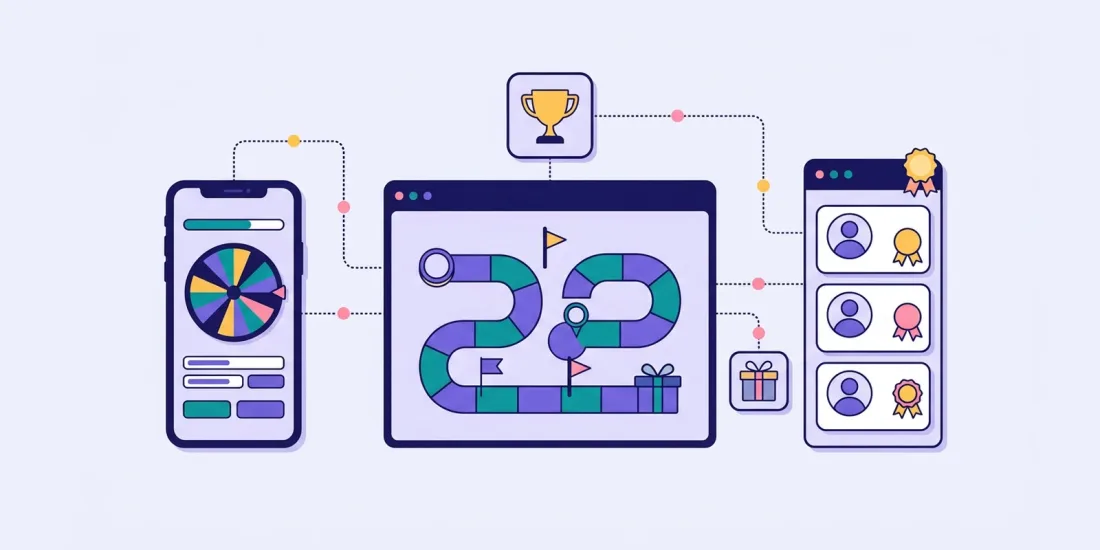
Game mechanics are the rules and building blocks that make a game a game: a chance to win, a score, a timer, a level to unlock, a list of top players. In marketing, the mechanic you pick decides how people play, how long they stay and what you get out of it.
This guide explains the most useful gamification mechanics for marketers, how they differ from game dynamics, and how to match each one to your campaign goal.
Mechanics vs Dynamics vs Aesthetics
Game designers often use the MDA framework, described by Robin Hunicke, Marc LeBlanc and Robert Zubek in their paper MDA: A Formal Approach to Game Design and Game Research. It splits a game into three layers:
- Mechanics: the rules and components. A wheel with eight slices, a 30-second timer, a points value for each item you catch.
- Dynamics: what happens when people play with those rules. Suspense while the wheel slows down, a rush to beat the clock, players coming back to improve their score.
- Aesthetics: how it feels. Excitement, curiosity, pride, the fun of competing with friends.
For marketers, the useful lesson is this: you choose the mechanics, but your audience experiences the dynamics and aesthetics. So start with the feeling and behaviour you want, then pick the game elements in marketing that create it.
Chance: Luck Games
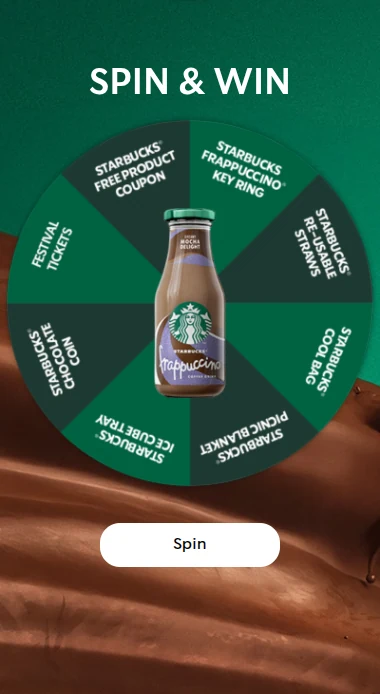
The mechanic: a random result decides if you win. Scratch cards, spin the wheel, slot machines, mystery boxes, roll the dice and lucky number games.
The dynamics: anticipation and a quick reveal. Not knowing where the wheel will stop is the whole point. Because anyone can win on the first try, the barrier to play is low.
What you control: the prizes, how many of each there are, the chance of winning each one and how often people can play.
Best for: fast sign-ups and handing out discount codes. Fleggaard's spin the wheel got 21,000 newsletter sign-ups from 34,000 participants.
Watch out for: prizes that attract people who only want the prize. Use prizes linked to your products or a discount for your own shop.
Challenge and Skill: High Scores and Timers
The mechanic: the result depends on how well people play. Points, a time limit and a target to hit. In a drop game, items fall from the top of the screen, and players catch them before the time runs out. Each item gives points, and some can take points away. In a memory game, players find the pairs as fast as they can.
The dynamics: concentration, the urge to try again and the satisfaction of getting better. People spend minutes with your brand instead of seconds.
What you control: how hard it is, how long it lasts, what falls or appears, and what score is needed to win a prize or a place in the draw.
Best for: brand awareness, product exposure and social media. Put your own products in the game, and players learn your range while they play.
Watch out for: games that take too long to learn. The challenge should be in getting a high score, not in understanding the rules.
Knowledge: Quizzes and Guessing
The mechanic: questions with right and wrong answers, or answers that lead to a result. Quizzes, video quizzes, personality tests, product finders, guess the word and guess the result.
The dynamics: curiosity ("Do I know this?") and the reward of getting it right or seeing a personal result. People learn something, and they remember where they learned it.
What you control: the questions, the answers, the result pages and whether a correct answer gives an instant prize or a place in a draw.
Best for: education, data collection and B2B. MS-forbundet used quizzes to warm up cold audiences and won 105 new recurring donors through telemarketing afterwards.
Watch out for: questions that are too hard or too much like a test. Make it feel like a game, not an exam.
Progress and Return Visits: Calendars
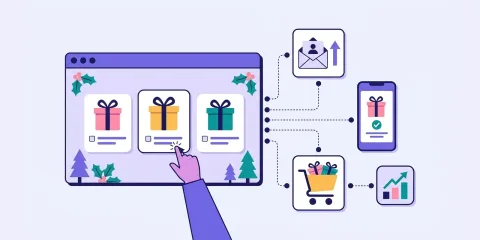
The mechanic: content unlocks over time. A Christmas calendar has 24 doors, one for each day from 1 to 24 December. An advent calendar opens one door each Sunday in Advent. A campaign calendar lets you choose any number of doors and dates.
The dynamics: habit and anticipation. People come back to see what's behind today's door. With auto-submit switched on, returning players don't have to fill in the form again, so it only takes one click to play.
What you control: the dates, the game behind each door, daily prizes and a grand prize draw at the end.
Best for: repeat engagement over weeks. In Toyota's Christmas calendar, participants came back on 18 of the 24 days on average, and 450,375 doors were opened.
Watch out for: a new, complicated game every day. One simple game that fits your goal is often enough.
Social: Leaderboards, Voting and Prediction
The mechanic: players compare themselves with others or decide something together.
- A leaderboard shows the best scores in a skill game, so every player can see where they rank.
- A vote game lets people choose their favourite product, design or nominee.
- Guess the result lets fans predict match scores, and a leaderboard can give points for the right result and the right winner. Hummel used the format to let football fans predict a score.
The dynamics: competition, belonging and talking about it. A high score is something people want to show off. A vote gives people a say.
What you control: which game the leaderboard uses, how long the competition runs, what the top players win and when predictions close.
Best for: sports, events, communities and social media buzz. At a stadium or festival, showing the top scores on a big screen adds even more excitement.
Watch out for: fairness. Write clear rules, decide how long the competition runs and tell people up front what the top players win.
Matching Game Mechanics to Campaign Goals
Here is a simple way to choose:
| Goal | Mechanic | Example formats |
|---|---|---|
| Fast sign-ups | Chance | Scratch card, spin the wheel, mystery box |
| Time with your brand | Skill and challenge | Drop game, memory, hit the target |
| Data and personalisation | Knowledge | Personality test, product finder, survey |
| Education | Knowledge | Quiz, video quiz |
| Repeat visits | Progress over time | Christmas, advent and campaign calendars |
| Buzz and community | Social | Leaderboard, vote game, guess the result |
You can also combine mechanics. A calendar with a quiz behind each door mixes progress and knowledge. A skill game with a leaderboard mixes challenge and social competition. An instant win game with a main prize draw mixes two kinds of chance.
Browse all 40+ formats to see which mechanics each one uses, and read our article on where your gamified campaign should live when you're ready to plan distribution.
A Few Rules That Apply to Every Mechanic
- Make it easy to start. People should understand the game in seconds.
- Make it fair. Clear rules, clear prizes, clear end dates.
- Make it mobile. Most people play on their phone.
- Make it yours. Use your own products, colours and pictures in the game.
- Make it worth it. A prize, a personal result or something useful to learn.
FAQ
What is the difference between game mechanics and gamification?
Gamification is the overall idea of using game elements outside games. Game mechanics are the specific building blocks you use to do it, like chance, points, timers, levels and leaderboards.
Which game mechanic gets the most sign-ups?
Chance-based games are usually the quickest to play, which makes them a strong choice for list growth. But the right mechanic depends on your audience and goal, so test and compare.
Can I use more than one mechanic in a campaign?
Yes. Calendars with a quiz behind each door, skill games with a leaderboard and instant win games with a main prize draw all combine mechanics.
Pick a Mechanic and Try It
The fastest way to learn which game mechanics work for your audience is to test one. Start your free 14-day trial, choose a luck, skill, knowledge or calendar template and launch your first campaign. No credit card required.