


When marketing starts to look the same everywhere, gamification gives brands a way to stand out. Adding game mechanics to non-game contexts builds deeper engagement and loyalty. It's not about entertainment for its own sake; it's about creating experiences that people remember and act on.
Agorify is an event management platform with tools for both virtual and on-site events, from registration and ticketing to interactive agendas and live streaming.
In a conversation with Agorify, Scratcher CEO Casper Christiansen shared his view on using gamification strategically across the marketing funnel, at events and beyond.
What Are the Benefits of Gamification in the Marketing Funnel?
Casper Christiansen: "Each stage of the marketing funnel can benefit from gamification. It's all about creating a memorable experience and offering your audience an incentive to move them along their customer journey.
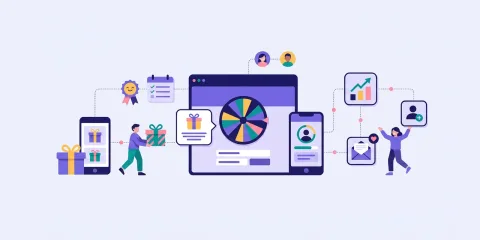
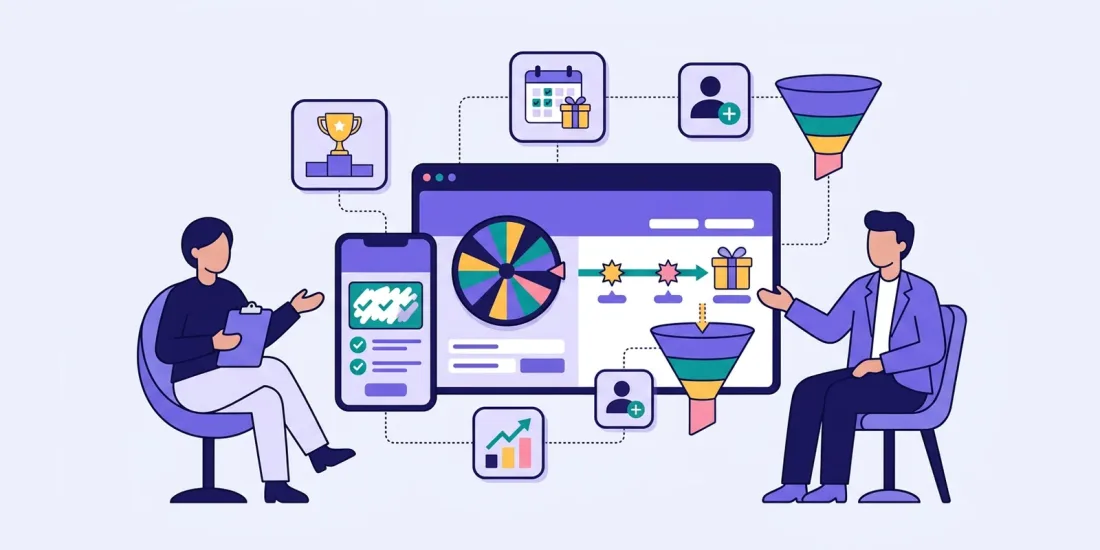
At the top of your funnel, interactive experiences can be used to build awareness and generate leads. Straightforward games like the Wheel of Fortune or Scratchcard are recognisable and engaging, allowing you to increase reach and seamlessly grow your marketing list. Mid-funnel is all about data enrichment. Here, gamification can be used to familiarise your audience with your brand and its products. Think of games that build brand knowledge or ask visitors about their buyer personalities, while you dig deeper and gather visitor demographics and individual preferences.
At the bottom of your funnel, create highly targeted, interactive campaigns with personalised messages. Games that increase conversions, like My Favourites or Quiz, help you nurture visitors and highlight known preferences, aiming to move them forward in their journey."
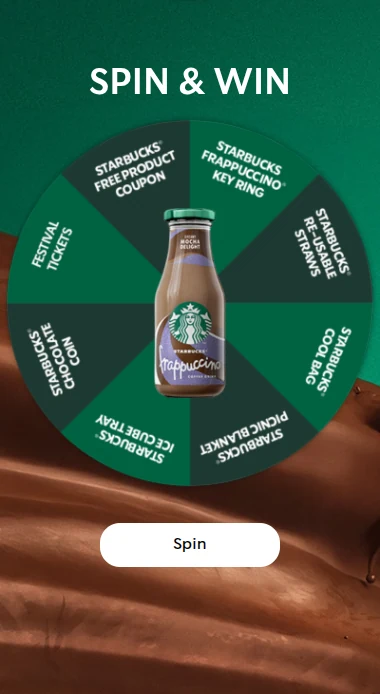
The top-of-funnel games Casper mentions are available in Scratcher as the Spin the Wheel and Scratch Card formats.
How Is Gamification Driving More Results?
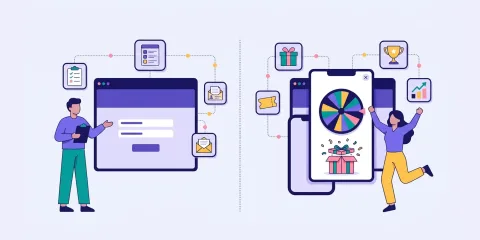
Casper Christiansen: "We often say that gamification marketing builds on the power of karma: when people receive something (a prize, discount code or reward points), they feel obliged to return the favour (a name, email address or phone number). It offers a memorable and engaging experience in return for valuable customer information.
Gamification drives results by using interactive elements and theories based on design, psychology and behavioural economics to attract and retain customers. Because it's fun and engaging, gamification also helps improve your audience's impression of your business. This ultimately influences customer behaviour and leads to increased reach, engaged target audiences, boosted sales and loyal customers."
How Do You See the Future of Gamification?
Casper Christiansen: "I believe gamification marketing will continue to evolve and become more personalised and integrated into daily life. Companies will use gamification techniques to create engaging and immersive experiences for their customers, and will use data and technology to tailor those experiences to individual users.
We're seeing a boom in gamification across industries, and we're thrilled to be at the forefront! It will likely become more widespread in a range of sectors, from retail and e-commerce to healthcare and education. Ultimately, the goal of gamification marketing will be to create lasting, meaningful connections with customers and drive business growth."
How Can Gamification Improve the Event Experience?
Casper Christiansen: "Gamification is a fantastic way to get your participants to fully engage with your event, whether in person or online. By adding an element of fun and competition, gamification can make the event more enjoyable and memorable for attendees, and can also help drive engagement and participation.
Rewards are incredibly motivating! Almost everyone has a competitive side. Set up a physical wheel of fortune or a digital game linked to a QR code, and create fun, interactive challenges at any stage of your event to reward attendees for their engagement. This is also a great way to track visitor behaviour and gather insights on which parts are most successful, helping you develop future events."
For more on this, read how interactive floor maps drive trade show traffic and sponsor ROI.
How Can a Business Decide Whether to Use Gamification?
Casper Christiansen: "I think the best thing about gamification is that it can be added to the marketing strategy of any company, regardless of its size or industry! One way to decide whether a business should use gamification marketing is to look at the company's goals and objectives and determine whether gamification can help achieve them. For example, if the business wants to increase customer engagement and loyalty, interactive campaigns can be used to create fun and engaging experiences for customers.
It's also important to consider the business's target audience and whether gamification marketing will appeal to them. If the target audience is typically drawn to games and competition, it may be a good fit.
Finally, it's important to evaluate the resources and budget available for gamification marketing, as well as the potential return on investment. If the potential benefits outweigh the costs, gamification marketing may be a worthwhile strategy for the business."
Key Takeaways
- Match the game to the funnel stage. Simple prize games build reach and leads; quizzes and personality tests enrich data; personalised campaigns drive conversions.
- Make it a fair exchange. Give people a real reward or experience, and they'll be happy to share their details.
- Use it offline too. At events, a QR code can turn a physical activity into a digital campaign that collects insight.
- Start with your goals. Gamification works when it's tied to a clear objective, an audience that enjoys playing and a realistic budget.
Want to test it for your own business? Start a free 14-day trial and build your first campaign without writing any code.