


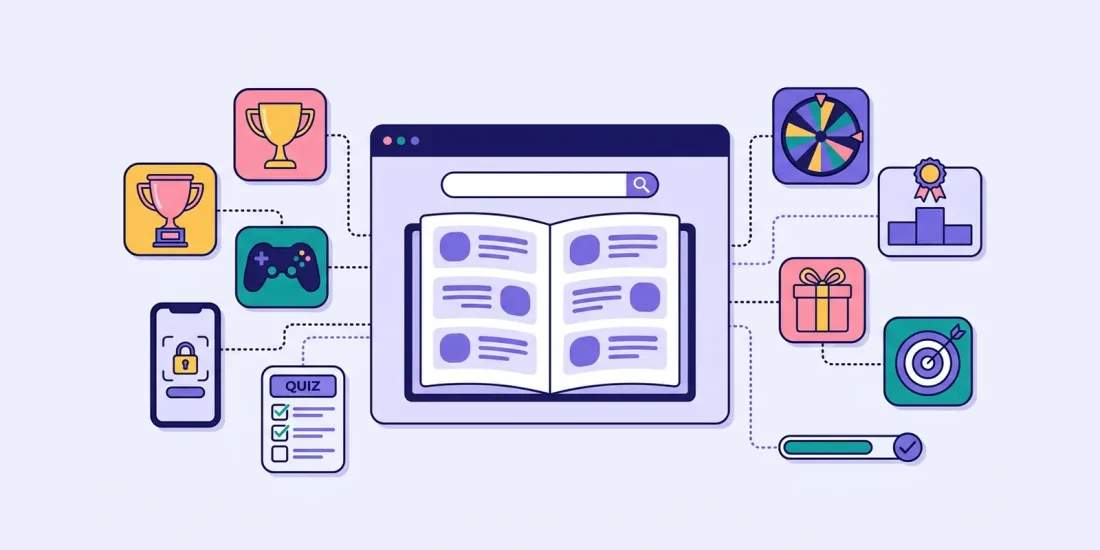
New to gamified marketing, or just tired of nodding along when someone says "instant win" or "participant conversion"? This gamification glossary explains 40 gamification terms every marketer should know, in plain English and with links to where you can see them in action.
How to Use This Gamification Glossary
The terms are grouped by topic, so you can read a whole section or jump to the word you need:
- Campaign terms
- Game mechanics
- Formats
- Data terms
- Distribution terms
- Metrics
Where a term has a real-world example, we link to a customer story with the actual numbers.
Campaign Terms
1. Gamification Marketing
Using game elements, like a prize, a score or a surprise, in marketing so that people take part instead of just looking. A short game in the browser that people play on your website, in a newsletter or from a QR code.
2. Lead
A person who has shared their contact details with you and shown some interest. In a gamified campaign, a lead is usually someone who filled in the sign-up form to play.
3. Opt-in
A clear, active choice to receive something, typically marketing by email or SMS. The person ticks a box or presses a button themselves. A box that is ticked in advance is not an opt-in.
4. Permission
Everyday marketing word for consent to receive marketing. "We got 60,000 new permissions" means 60,000 people said yes to hearing from you, as POWER did in its Black Friday campaign.
5. Double Opt-in
A two-step sign-up. After entering their email, the person gets a message with a link to confirm. It proves the email is real and that the owner wants to sign up. In Scratcher, double opt-in is part of the Email module.
6. Consent Text
The short text next to the checkbox that explains what people say yes to: who will contact them, about what and how. You write your own consent texts in Scratcher.
7. Participation Limit
A rule for how often each person can play: once in total, once a day or as often as they like. Limits keep campaigns fair and stop people from entering again and again.
8. Always-on Campaign
A campaign that runs all year instead of for a fixed period. Dansk Boligvurdering runs 30 continuously active campaigns, mostly quizzes, that generate leads all the time.
Game Mechanics
9. Game Mechanics
The rules and building blocks of a game: chance, score, time limit, levels, rewards. In marketing, the mechanic decides how people play and win.
10. Instant Win
A prize mechanic where people see right away if they won. Scratch cards, spin the wheel and mystery boxes are typical instant win games. See how prizes work in Scratcher.
11. Prize Draw
A prize mechanic where everyone who takes part gets an entry, and the winners are picked later at random, for example daily, weekly or at the end of the campaign. In Scratcher, the platform picks the winners at the times you choose.
12. Consolation Prize
A small prize for people who didn't win the main prize, often a discount code. BonBon-Land gave non-winners a promo code for tickets, and about 9% of participants used it.
13. Winning Chance (Odds)
How likely it is that a player wins a given prize. In instant win games, you set the chance for each prize and how many of each can be won in total.
14. Prize Pool
The total set of prizes in a campaign: how many of each, what they are worth and when they can be won. Spreading the pool over the whole period means there is still something to win at the end.
15. Luck-Based Game
A game where chance decides the result. Quick to play and great for sign-ups. Examples: scratch card, spin the wheel, slot machine.
16. Skill-Based Game
A game where the result depends on how well people play, usually measured as a score. People play longer and try again. Examples: memory, drop game, hit the target.
17. Knowledge-Based Game
A game built on questions: quizzes, personality tests, polls and product finders. Every answer tells you something about the player.
18. Leaderboard
A ranked list of the best scores in a skill game. Players see where they rank and come back to climb higher. In Scratcher the leaderboard is a special format, included on Professional or as an add-on.
19. Streak
Coming back several days in a row. In calendars, people return for each new door. In Toyota's Christmas calendar, participants came back on 18 of the 24 days on average.
20. Reveal
The moment the result is shown: the scratch layer comes off, the wheel stops, the box opens. A good reveal builds a second of suspense and is a big part of why luck games feel exciting.
Formats
Scratcher has 40+ interactive formats. These are the ones you will hear about most.
21. Scratch Card
A digital version of scratch and win. People scratch the card on screen to see if they won. See the scratch card.
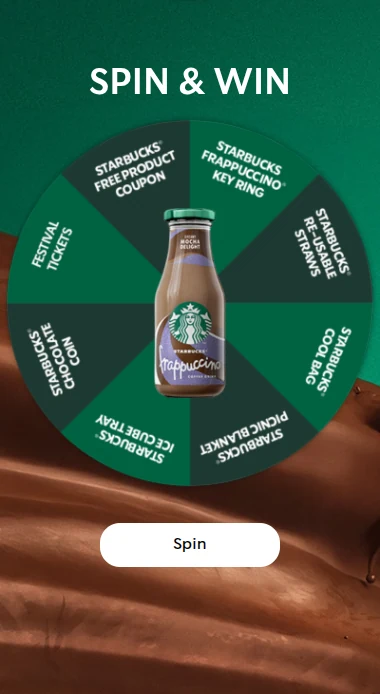
22. Spin the Wheel
Also called a wheel of fortune or prize wheel. Each slice is a prize, a discount or a "try again". People spin and watch where it stops. See spin the wheel.
23. Mystery Box
People pick one of several boxes, and it opens to show a prize. Built on curiosity. Burger King used it to launch a new Whopper and saw a 45.5% coupon redemption rate.
24. Slot Machine
Reels spin, and three matching symbols win the prize linked to that symbol. Use your own products as the symbols.
25. Memory Game
Players flip two cards at a time to find matching pairs. Good for showing products, because people look closely at every card.
26. Quiz
Questions with right and wrong answers, or answers that lead to a result. A simple way to teach people about your brand.
27. Personality Test
A quiz with no wrong answers. The answers add up to a personal result, like a profile or a matching product. See the personality test.
28. Product Finder
A product recommendation quiz. People answer a few questions and see the products that fit. Also called guided selling.
29. Online Calendar
A Christmas, advent or campaign calendar with doors that open on set dates, each with a game or prize behind it. A Christmas calendar has 24 doors in December; an advent calendar in Scratcher has four, one for each Sunday in Advent.
30. Pre-registration
A waitlist page with a countdown, where people sign up to hear when your campaign or launch starts. Often used before a Christmas calendar.
Data Terms
31. Zero-Party Data
Data people choose to give you themselves, like preferences, plans and opinions. A term coined by Forrester Research. Read more about data enrichment.
32. First-Party Data
All data you collect directly from your own audience in your own channels, both what people tell you and what you see them do.
33. Data Enrichment
Adding new information to contacts you already have, for example by asking existing subscribers to take a quiz or update their preferences.
34. Segment
A group of contacts who share something, like an interest, a location or an answer to a quiz question. Segments let you send messages that fit each group.
Distribution Terms
35. Landing Page
A campaign page with its own link that you share in newsletters, ads, social posts or QR codes. Every Scratcher campaign gets one, and it can be on your own web address with Professional or as an add-on.
36. Pop-up
A window that shows your campaign on top of your website. A game pop-up invites people to play instead of just asking for an email. Read about pop-ups.
37. Exit Intent
A pop-up trigger that shows the campaign when a visitor on desktop moves to leave the page.
38. Embed
Placing the campaign inside a page on your own website with a small piece of code, so it looks like part of the page.
Metrics
39. Conversion Rate
In gamified campaigns, usually the share of visitors who go on to take part and sign up. Dansk Outlet's Easter scratch card had 16,000 unique visitors and 13,000 participants, an 81% conversion rate. Always check how a conversion rate is defined before you compare campaigns.
40. Cost per Lead (CPL)
Total campaign cost divided by the number of leads. BOBO's wheel of fortune reached its lowest-ever CPL of €0.18.
Bonus Metrics Worth Knowing
- Participation rate: players compared with total visitors.
- Completion rate: the share of people who start a quiz or survey and finish it.
- Engagement time: how long people spend with your campaign.
- Redemption rate: the share of winners or code holders who use their prize.
- Click-through rate (CTR): the share who click a follow-up link, like "shop now".
You can see visits, players, sign-ups and winners in near real time in Scratcher's analytics, and our article on gamification marketing KPIs explains which ones to track for each goal.
Put the Words into Practice
Now you know the vocabulary, the next step is to try it. Start your free 14-day trial, pick a format and set up your first instant win, draw or quiz. No credit card required.