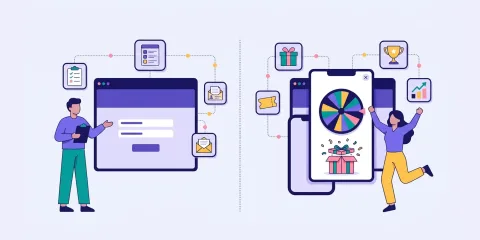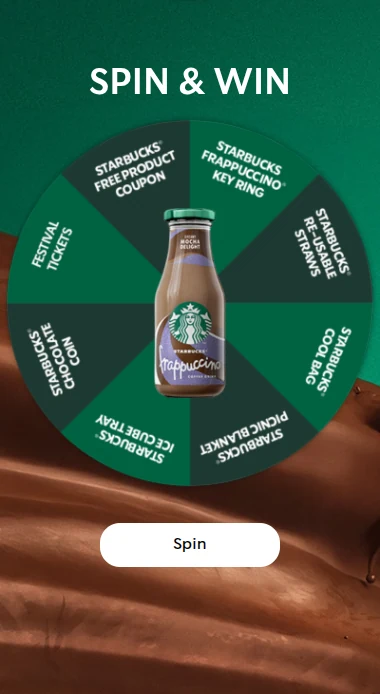



A gamified popup lets visitors spin a wheel, scratch a card or open a mystery box before or after they sign up, while a standard email popup is a simple form, often with a fixed discount. A standard popup is often enough with low traffic, a strong offer or little time. A game tends to win with high traffic, seasonal moments or margin pressure.
Should your website show a simple email popup, or a gamified popup where visitors spin a wheel or scratch a card before they sign up? We make game pop-ups, so you might expect us to say "always the game". But that is not the honest answer. Both have their place, and the best choice depends on your traffic, your offer and your margin. This guide compares the two, looks at what the public data says, and shows you how to run a fair test on your own website.
How a gamified popup differs from a standard email popup
The standard email popup
A box with a headline, an email field, a consent checkbox and a button. Often with an offer: "Sign up and get 10% off your first order."
- Quick to make and quick to fill in.
- Familiar. Visitors know exactly what it is.
- Easy to ignore, for the same reason.
- The reward is fixed. Everyone gets the same thing, so the cost is predictable but it applies to every sign-up.
The gamified popup
The same position on the page, but the visitor plays before or after signing up: a spin to win popup, a scratch card, a mystery box or a gift to unwrap. Some games end with a product tip instead of a prize.
- Feels like a gift, not a form. People get a moment of fun and a chance to win.
- The reward varies. You decide how many of each prize there are, so you control the total cost.
- Takes a few more seconds, so it has to be quick and work well on a phone.
- Can collect more than an email, for example a product interest from a short quiz.
What the public data says
There is not much independent research comparing the two, so most numbers come from popup vendors' own customer data. Read them with that in mind.
As of October 2026, one popup vendor's statistics report, dated August 2026 and based on 516,866,935 popup views and 21,875,675 leads in its own data, reports that spin-to-win popups converted at 8.67%, compared with 3.70% for popups that do not use it. That is a big difference.
Two caveats are worth keeping in mind:
- Averages hide context. The brands that choose spin-to-win may also have stronger offers or more traffic.
- Conversion is not the same as value. A popup that brings in twice as many sign-ups is only better if those subscribers open, click and buy.
Our own customers' results point the same way. The online furniture store BOBO wanted to give its visitors something more fun and interactive than a standard pop-up, and ran a wheel of fortune with a gift card as the main prize and 1,000 smaller gift cards as consolation prizes. It reached 6,845 participants and its lowest-ever cost per lead: €0.18.
Placement matters as much as format, though. Watery, a swimwear retailer, found that it made more sense to send customers to a full Scratcher campaign page than to rely on a pop-up alone. Its anniversary wheel of fortune got 7,200 new sign-ups and a 41% conversion rate.
When a simple form is enough
A standard email popup is often the right choice when:
- Your traffic is low. With a few hundred visitors a month, the difference in sign-ups may not justify setting up and managing prizes.
- Your offer is already strong. If you have a genuinely exclusive newsletter, such as a weekly drop or a members-only price, people will sign up without a game.
- Your audience is mainly B2B or very serious. A wheel on a page about legal software may feel out of place. A short quiz may still work.
- You need it live in five minutes and do not have time to think about prizes.
- The page is about something else entirely, like a support article, where any interruption should be minimal.
When a game adds value
A gamified popup tends to earn its place when:
- You have steady, high traffic. Small differences in conversion rate become thousands of extra subscribers.
- It is a seasonal moment. Christmas, Black Friday, Easter and anniversaries are natural reasons to play. A themed scratch card or mystery box fits the mood.
- You want to build your brand, not just your list. A playful experience leaves a better impression than another discount box.
- You want to protect your margin. Instead of giving 10% to everyone, you can give a few big prizes and many small ones.
- You want to learn something. A short quiz or product finder in the popup tells you what people are looking for.
- You sell in a category where everyone offers the same discount. A game is a way to stand out.
Wolt saw this in its winter campaign. Its marketing manager found that combining gamified elements with offers like free delivery was more engaging than traditional voucher giveaways, and the campaign boosted Wolt's marketing permissions by 150%.
Cost per lead and margin
The real comparison is not conversion rate. It is the cost of each subscriber, and what that subscriber is worth.
Standard popup with a fixed discount:
- Every subscriber who buys uses the discount.
- The cost grows with every sale, and you cannot cap it.
Gamified popup with a prize pool:
- You choose the prizes and how many there are: for example a few gift cards, some free products and free shipping or a small discount as a consolation prize.
- You can cap the total budget, and decide when prizes can be won so there is still something left at the end of the campaign.
- Unique discount codes stop codes from being shared.
To compare, work out cost per lead (the cost of prizes and tools divided by the number of sign-ups) and, later, revenue per lead (sales from those subscribers over three or six months). A cheaper lead that never buys is not a bargain.
In Scratcher, you set the prizes, the number of each and how often people can play. Unique codes are included on Basic and Professional, and prize handling runs automatically while the campaign is live.
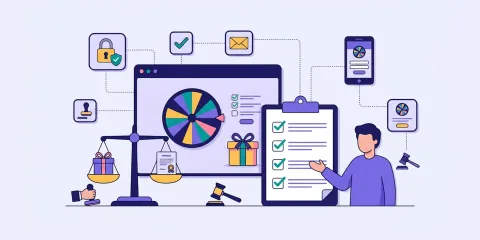
Running a fair A/B test
If you want to know which works on your website, test it properly.
- Same placement, same trigger. Only the popup content should differ: a form vs a game.
- Comparable offers. A wheel with up to 50% off against a form with 10% off is not a fair test. Try to match the expected cost per sign-up.
- Enough traffic. Wait until each version has had enough views for the difference to be meaningful, not just a lucky afternoon.
- Same period length. If you run the versions one after the other, avoid comparing a normal week with a sale week.
- Same devices. Look at mobile and desktop separately.
- Measure beyond the sign-up: confirmation rate, open rate, first purchase and unsubscribes after 30 days.
Track every version with its own campaign, so you can compare visits, players and sign-ups side by side.
Which one should you choose?
- Low traffic, strong offer, little time: start with a standard email popup.
- High traffic, seasonal moment or margin pressure: test a game pop-up.
- Want to learn about visitors: try a short quiz or product finder in the popup.
- Not sure: run both, one after the other, and let your own data decide.
Every Scratcher game can run as a game pop-up, with the same triggers, targeting and frequency settings described on our pop-ups page. Our guide on how to create high-converting pop-ups walks through the setup.
Ready to test a game against your current popup? Start your free 14-day trial, or book a meeting and we will help you design a fair test.