


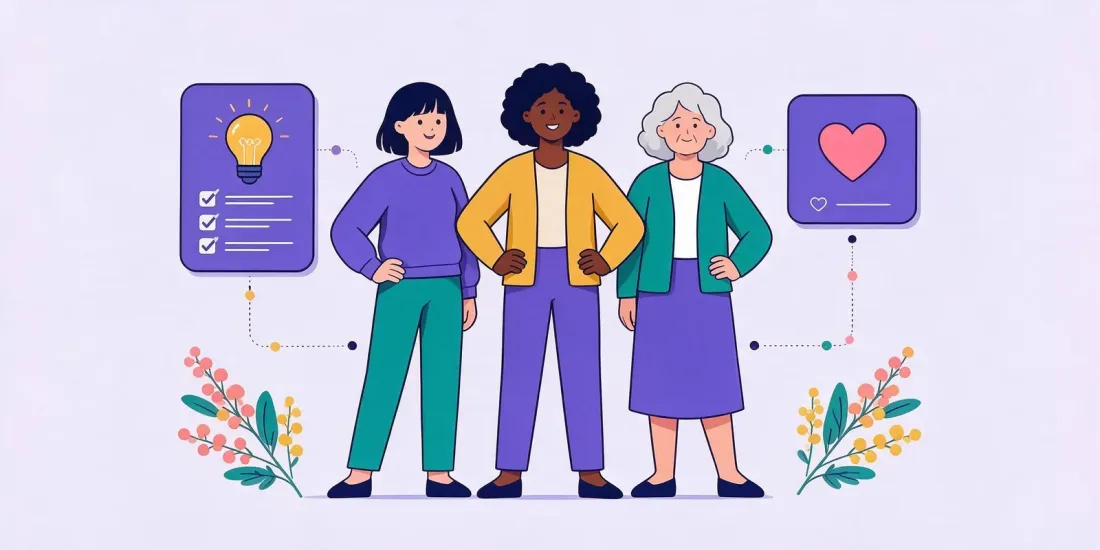
The best International Women's Day campaign ideas give something real: support for a cause, a platform for women in your company or community, or knowledge people did not have before. Good formats are a quiz about women in history or science, a vote where your audience picks which women's organisation gets your donation, and stories from your own team. Skip the pink discount code. It is the fastest way to look like you missed the point.
International Women's Day is on 8 March every year. For marketers it is a tricky day. Done well, it shows what your brand stands for. Done badly, it gets called out as pinkwashing: a campaign that borrows the language of equality without anything behind it. This guide gives you a planning timeline, ten ideas with the right game format and channel for each, and the checks to run before you publish.
When Is International Women's Day?
International Women's Day falls on 8 March, the same date every year. In 2027 it is on a Monday, and in 2028 on a Wednesday.
A few things to know per market:
- Denmark: the day is called kvindernes internationale kampdag. It was proposed at an international women's conference in Copenhagen in 1910, according to Lex.dk.
- Germany: 8 March is a public holiday in Berlin (since 2019) and in Mecklenburg-Vorpommern (since 2023), as confirmed by the Deutsche Rentenversicherung. In the rest of Germany it is a normal working day.
- UK: Mothering Sunday 2027 is on 7 March, the day before. Keep the two campaigns clearly apart.
- Ramadan: in 2027, Ramadan is expected to end around 8 or 9 March, so International Women's Day falls close to Eid al-Fitr. If you have many Muslim customers, read our guide to Ramadan and Eid campaign ideas.
You can see all of these dates, per country, in our free marketing calendar.
Start With Substance, Not a Slogan
Before you pick a game, answer one question honestly: what does your company actually do for women, and what can it give on this day?
Good answers look like this:
- "We donate to a women's shelter, and we want our customers to help decide how much."
- "Half our engineers are women. We want to show their work, not their gender."
- "We sell tools for small businesses, and many of our customers are women founders. We want to give them visibility."
- "We have no story yet. This year we will listen and learn, and we will start with a survey."
If you cannot find an honest answer, a quiet post is better than a loud campaign. Campaigns that celebrate women in March while the company's own practice says otherwise are exactly what people criticise as pinkwashing.
Avoid the "pink discount"
A "20% off for women" code, a pink version of a normal product at a higher price, or "treat yourself, ladies" copy tells people that you see the day as a sales event. It also excludes everyone who is not the target of the offer. If you want to use prizes or codes, link them to the cause: a donation per participant, a prize from a women-owned business, or tickets to an event about the topic.
Ask people who know
Involve women in your company and, if you partner with an organisation, let them review the concept and the copy. They will spot a tone-deaf line long before your audience does.
Planning Timeline
| When | What to do |
|---|---|
| 8 weeks before | Decide on the substance: cause, partner, people to feature. Agree budgets for donations and prizes. |
| 6 weeks before | Contact the NGO or the people you want to feature. Get approval for names, photos and quotes. |
| 4 weeks before | Build the campaign, write the questions or stories, set up consent and terms. |
| 2 weeks before | Test on mobile, get the partner's review, plan newsletter, social and in-store promotion. |
| 1 week before | Announce. Send a teaser to your list. |
| 8 March | Go live or reveal the results. Publish stories from the people involved. |
| 1 to 2 weeks after | Report back: how much was donated, what people answered, what you will do next. |
The report-back step is what most brands skip, and it is what makes a campaign feel honest. If you promised a donation, show the receipt.
10 International Women's Day Campaign Ideas
1. A quiz about women in history or science
Ask five to eight questions about women who shaped your field: inventors, scientists, athletes, founders. Show a short explanation after each answer, so people learn something even when they get it wrong. A quiz works well as a landing page shared in your newsletter and on social media, with a prize draw among everyone who takes part.
Tip: stay close to your own industry. A bank can ask about women in economics, a sports club about women athletes from the region, a software company about women in computing.
2. A donation mechanic: every play gives
Pledge a fixed amount per participant to a women's organisation, up to a cap you choose. Any simple game works, from spin the wheel to a memory game. Show the running total in your communication and report the final amount after the campaign. If someone has to pay, donate or buy something to take part, check the rules first, as that can change how the campaign is treated legally.
For more on how organisations use games for causes, read why gamification marketing works so well for NGOs.
3. Let your audience choose the cause
Pick three organisations that work for women: for example one for girls' education, one against violence and one for women in business. Let people vote in a vote game or an online poll, and give the donation to the winner, or split it according to the votes. People care more about a donation they helped decide.
4. Partner with an NGO on a quiz about their work
Many organisations struggle to explain what they do. A quiz about their work, co-branded and shared by both of you, gives them reach and gives you a meaningful campaign. The Danish children's charity Red Barnet used a five-question Christmas quiz about its international work to collect 2,000 leads. The same approach works on 8 March with a women's organisation. Agree up front who may contact the participants, and ask for separate consent for each.
5. Women in your company, in their own words
Feature colleagues with short stories about their work, not about being women. Turn it into a game with a "who said it?" quiz for customers, or use an interactive graphic where people click on each person to read their story. Get written approval from everyone you feature, and let them see the final version.
6. Highlight women in your community
A shop, club or local brand can ask customers to nominate a woman who made a difference locally: a coach, a teacher, a volunteer. Use a photo competition or a nomination form, then let the community vote. The prize goes to the nominee, not only to the person who nominated. Be careful with photos of others: entrants need permission from the people in them.
7. Shine a light on women-owned suppliers or partners
If you sell products from women-founded brands, build a product finder or a short personality test that matches customers with them. This is honest, useful and supports real businesses, as long as you sell them all year and not just in March.
8. A survey that listens
If your company is at the start of its journey, ask instead of telling. A short survey to customers or employees about what they expect from you on equality, with a prize draw as a thank-you, gives you input for next year. Share what you learned.
9. An event or talk with a game attached
Host a talk, a panel or a webinar on 8 March, and use a quiz or a guess the word game for registration and engagement. Use a QR code on screens or printed material to let the audience join from their phones. In Berlin and Mecklenburg-Vorpommern, remember that 8 March is a day off, which can work for or against an event.
10. A B2B angle: women leaders in your industry
For B2B, a short video quiz with clips from women leaders in your field, sent to your customer list, is more relevant than a consumer giveaway. The prize can be a seat at an industry event or a mentoring session, with the speaker's consent.
Prize Ideas That Fit the Day
- A donation in the winner's name to a women's organisation
- Products or gift cards from women-owned businesses
- Books by women authors in your field
- Tickets to a talk, a workshop or a women's sports match
- A course or mentoring session (only with the mentor's agreement)
Avoid prizes that rely on stereotypes, such as beauty products for a campaign that has nothing to do with beauty. If you run a competition, read how to run an online competition for the basics, and use our free competition terms generator to draft your terms.
Sign-ups and Consent
An International Women's Day campaign is not mainly a list-building campaign, and people will notice if it feels like one. Still, you can collect sign-ups respectfully:
- Make the newsletter consent a separate, unticked checkbox, never a condition for taking part in a donation or vote.
- Say clearly who gets the data. With an NGO partner, ask for consent for each organisation separately.
- Ask only for what you need: name and email are usually enough.
Our free consent text generator helps you write the checkbox text, and our guide to competitions and GDPR covers what to think about when you collect data in Europe.
What to Measure
- Participation: how many took part, and how many shared.
- Learning: for quizzes, how many got the answers right, and which questions surprised people.
- Impact: total donated, number of votes per organisation, number of nominations.
- Sign-ups: opt-in rate, compared with your other campaigns.
- Sentiment: comments and replies. Any criticism is worth reading carefully.
Report the impact numbers publicly afterwards. "Together we raised €X for Y" is a better post than any slogan.
FAQ
Should a brand run a giveaway on International Women's Day?
It can, if the giveaway supports something meaningful, such as a donation per entry, prizes from women-owned businesses or a quiz that teaches something. A generic giveaway with a pink theme is likely to come across as opportunistic.
Is a discount for women a good idea on 8 March?
Usually not. It frames the day as a sales event and can feel excluding or patronising. If you want a commercial element, tie it to the cause, for example by donating part of the revenue from a product, and show the result afterwards.
Is International Women's Day a public holiday?
In most of Europe, no. In Germany, it is a public holiday in Berlin and Mecklenburg-Vorpommern. Check the marketing calendar for your markets.
What can a small business do for International Women's Day?
Keep it simple and honest: feature the women behind your business or your suppliers, support a local organisation with a donation per participant, or run a short quiz about women in your field. A small, true story beats a big, empty campaign.
How do we avoid pinkwashing?
Base the campaign on something you actually do, involve the people you are talking about, avoid stereotypes, keep consent separate from the good cause, and report back on the impact. If your company practice does not match the message, fix the practice first.
Plan Your 8 March Campaign
International Women's Day is a chance to show what your brand stands for, and interactive formats make it easy to involve your audience instead of just talking at them. Explore all our game formats, try them in a free 14-day trial, or book a meeting if you want to talk through an idea with us first.