


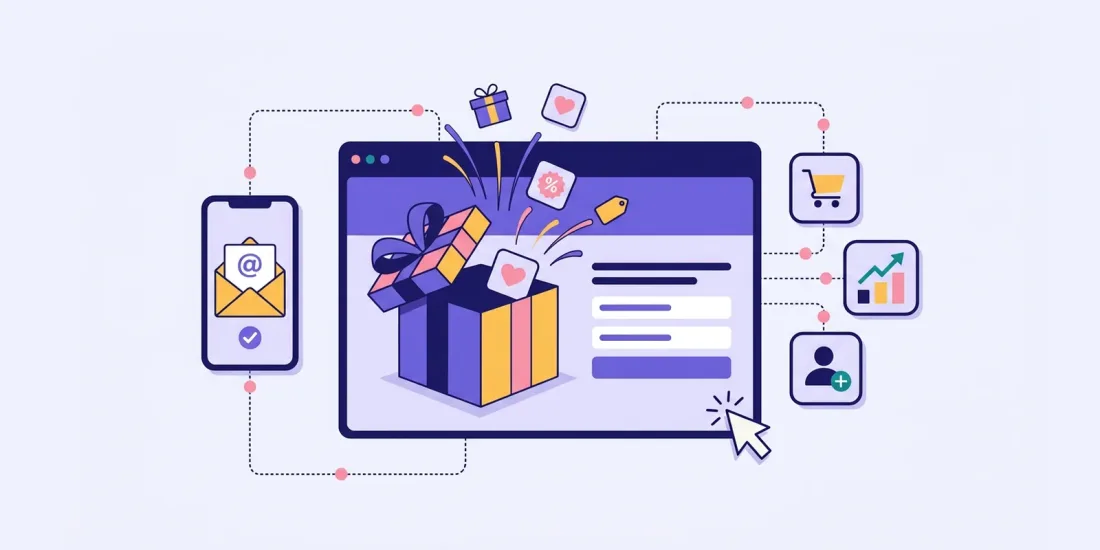
Mystery box marketing is a luck game where people pick one of several closed boxes, the box opens and they see what they won. The surprise makes small prizes feel bigger and gives you a natural moment to ask for an email. Burger King used a mystery box to launch its new Whopper and reached more than 140,000 unique participants.
A closed box is hard to ignore. You want to know what is inside, and the only way to find out is to open it. That simple bit of curiosity is what makes mystery box marketing work: people pick a box, it opens, and they see what they won. It takes seconds, feels personal and gives you a natural moment to ask for an email.
In this guide we look at why surprise works so well, how a mystery box compares to a scratch card or a wheel, how to plan your prizes, and how brands like Burger King and Wolt have used it.
Why surprise works
Most marketing tells people exactly what they get: 20% off, free shipping, buy one get one free. That is clear, but it is also easy to scroll past. A surprise reward does the opposite. It holds something back.
A few things happen when you do that:
- Curiosity pulls people in. A closed box asks a question. People want the answer.
- The choice feels personal. In a mystery box game, people choose the box themselves. The result is still decided by the prizes you set up, but picking "my box" makes the moment feel like theirs.
- The reveal is a small event. A shuffle, a lid that opens, a prize that appears. It turns a discount into an experience.
- Small prizes feel bigger. A free coffee from a box you picked feels more fun than the same coffee printed in a banner.
That is also why a mystery gift campaign works so well in a pop-up or on social media, where you only have a second or two to catch someone's attention.
Mystery box vs scratch card vs wheel
All three are luck games. They are quick to play, need no rules and are great for growing a newsletter list. The difference is the feeling.
- Mystery box: people choose between several closed boxes. The feeling is "I hope I picked the right one". Good for product sampling, seasonal themes (eggs, hearts, presents) and pop-ups.
- Scratch card: people scratch away a layer to reveal the prize. The feeling is a slow reveal. Good for instant wins and campaigns that need to be live fast.
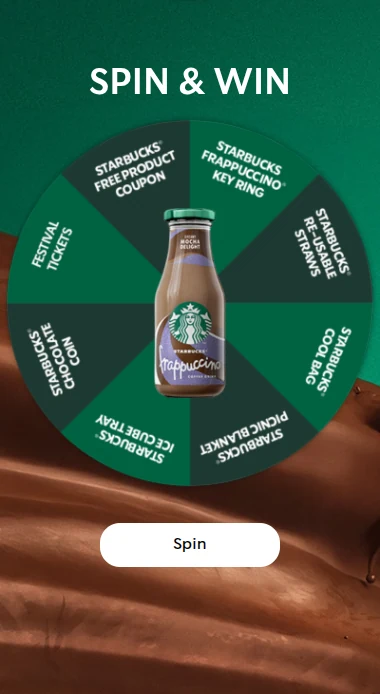
- Spin the wheel: people spin and watch the wheel slow down. The feeling is suspense, and they can see all the possible prizes upfront. Good for showing a range of prizes and for retail campaigns.
There is also a fourth option worth knowing: the gift surprise. Here there is just one gift, and it is meant for the person playing. It feels less like a gamble and more like a present from your brand, which makes it a good gift surprise game for birthdays, thank-yous and welcome flows.
A simple rule: if you want people to feel they picked their luck, use a mystery box. If you want to say thank you, use a gift surprise.
Prize ladder design
A good prize plan is what makes surprise reward marketing pay off. Too few winners and people feel cheated. Too many big prizes and your budget is gone on day two. Think of it as a ladder.
The three steps of the ladder
- A few big prizes. The headline prize you show on the start page. A product people want, a trip, a gift card or a year's supply of something.
- Plenty of mid-level prizes. Free products, bigger discounts, free delivery for a month.
- Something for everyone else. A small discount code, free shipping, a free trial or a member perk, so nobody leaves empty-handed.
Wolt used the bottom step cleverly. In its winter mystery box campaign, a Wolt Plus trial was positioned as a consolation prize, and Wolt Plus subscriptions rose by 16%. Read the Wolt story.
Control how prizes are given out
In Scratcher you decide which prizes can be won, how many of each and when. That way you can:
- Spread big prizes across the whole campaign, so there is still something to win on the last day.
- Give out a set number of prizes per day, which is useful if prizes are picked up in store.
- Hand out unique discount codes automatically, or barcodes people can show at the till.
- Run a daily or weekly draw on top of the instant wins.
- Decide how often each person can play.
You can read more about all the options on our prizes page.
Match the boxes to the prize
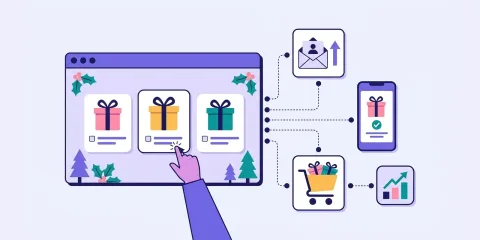
The boxes themselves are part of the story. Use your own packaging for a product giveaway, eggs at Easter, hearts for Valentine's Day or wrapped presents at Christmas. You can use the same picture for all boxes or give each one its own look. Three to six boxes is usually enough, and they should be big enough to tap easily on a phone.
Campaign ideas: launches, seasonal and loyalty
Product launches and sampling
Hide your new product in the boxes and let people win a taste. Winners get a coupon to pick it up in store. This is exactly what Burger King did to launch its new Whopper (more on that below).
Seasonal campaigns
- Easter egg hunt: boxes become eggs with discounts and chocolate inside.
- Valentine's hearts: three hearts with gifts for two.
- Halloween: spooky boxes with treats (and no tricks).
- Christmas presents: a new set of presents every day in December, for example behind the doors of a calendar.
- Black Friday boxes: a different discount in each box, so people pick their deal.
Loyalty and app growth
- Member perk box: let club members pick a box once a week for a small reward.
- App download push: use the boxes to give out app-only perks or free trials.
- Win-back campaign: send lapsed customers a mystery box with a comeback offer.
Website pop-ups
A row of boxes in a pop-up is a friendly way to ask for an email. It feels like a small gift rather than a form, so more people take part. See how game pop-ups work.
Setup
You can have a mystery box running in an afternoon. Here is the usual flow:
- Pick a template. Start from a mystery box template, or ask Rex, our AI assistant, to suggest one for your goal. Rex can add your logo, colours and fonts from your website.
- Design the boxes. Choose how many boxes (1 to 10) and rows to show, the space between them and what each box looks like. Turn on the shuffle effect for a bit of suspense.
- Add a short form. Usually just a name, an email and a clear newsletter permission. Ask only for what you will use.
- Set up prizes. Add your prize ladder, set limits and dates, and decide how often people can play.
- Connect your tools. Send every sign-up to your email tool or CRM through our integrations, such as Klaviyo, Mailchimp or HubSpot.
- Publish. As a landing page for social and newsletters, a pop-up on your website, embedded on a page, or behind a QR code in your store.
- Follow up. Give winners a clear next step ("Pick up your free burger at your nearest restaurant"), and send everyone a welcome email so the people who did not win still have a reason to buy.
Mystery box marketing examples
Burger King: sampling the new Whopper
Burger King wanted people across Denmark and Sweden to try its improved Whopper. Instead of one big PR event in one store, it used a mystery box game online. Over seven days, people had daily chances to win a free Whopper or discount coupons for other products.
The results:
- More than 140,000 unique participants
- A 45.5% redemption rate for the free Whopper coupons
- 6,292 people tried the new Whopper for free
- A 9% increase in Whopper orders during the campaign
Spreading the prizes over days and locations also spread the store visits, which helped the kitchens. Read the Burger King story.
Wolt: a winter mystery box
Wolt ran a mystery box over two months in winter to reach both existing customers and new users, promoted with in-app banners, outdoor ads and performance marketing. The campaign reached more than 200,000 participants and boosted marketing permissions by 150% compared with the starting figures. Read the Wolt story.
What the two have in common
- A prize people actually want (a burger, free delivery).
- A consolation prize that moves people towards a purchase or subscription.
- Prizes spread over time, so people come back.
- Strong promotion where the audience already is.
Tips before you launch
- Keep the choice small. Three to six boxes is plenty.
- Show the prize when the box opens. A picture of the actual prize beats a line of text.
- Make coupons easy to use, for example with a barcode at the till or a unique code in the webshop.
- Do not hide the rules. Write clear terms and show the main prize on the start page.
- Test it on your phone before you go live.
Make your first mystery box
Surprise is one of the simplest ways to get attention, and a mystery box turns it into sign-ups and sales. Start a free 14-day trial and build your first mystery box from a template, or book a meeting if you want help with the prize plan.