


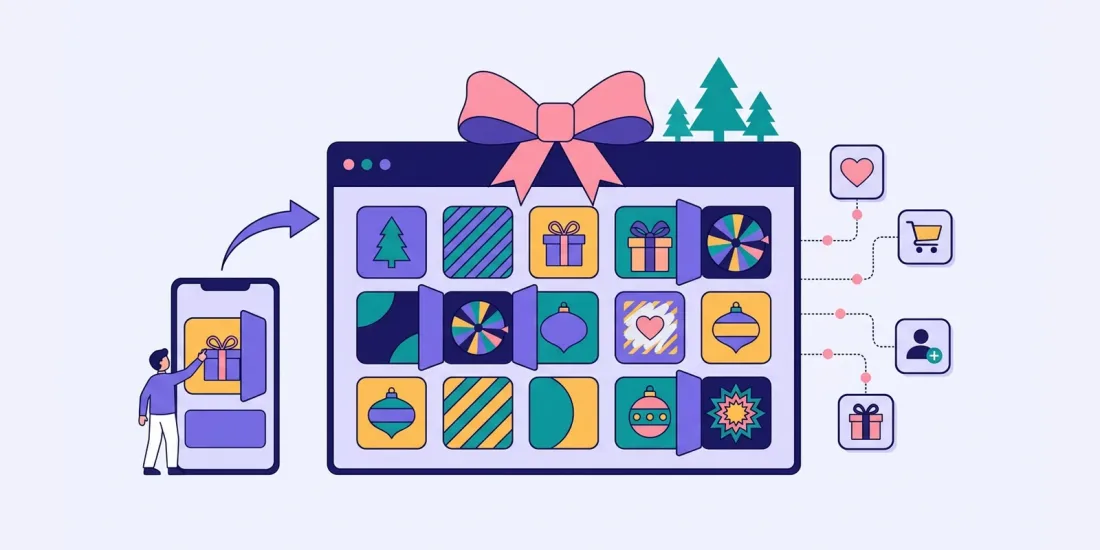
An online Christmas calendar is a digital version of the Advent calendar where a new door opens every day, typically from 1 to 24 December, with a game, giveaway or challenge behind it. Because people come back daily, it works well for lead generation, loyalty and seasonal sales. In Toyota's calendar, participants played on an average of 18 days each.
Want to turn the festive season into a high-performing marketing campaign? Online Christmas calendars combine a much-loved tradition with gamified engagement, which makes them a strong tool for brand visibility, lead generation and customer loyalty.
In this guide you'll learn how to build one that delights your audience and delivers real business results, with practical strategies, the psychology behind the format and examples from brands like Toyota and Continental.
The History of the Online Christmas Calendar
Traditional Origins (19th–20th Century)
Christmas calendars began in Germany in the 19th century as paper countdowns to Christmas Eve, often with pictures, poems or small chocolates behind each door. By the mid-20th century, printed Advent calendars had become a widespread holiday tradition across Europe and North America.
Branded Physical Campaigns (1980s–2000s)
Retailers and consumer brands started adopting the format, producing branded Advent calendars filled with samples or product teasers. These physical calendars kept brands top of mind through the holiday season and encouraged daily interaction.
Digital Reinvention and Gamified Marketing (2010s–Present)
As digital marketing matured, the Christmas calendar became an interactive online format. Modern campaigns offer daily games, giveaways or challenges across the 24 days of December. Today they're widely used for:
- Daily customer re-engagement
- Loyalty building through habitual participation
- Lead generation and data capture
- Driving seasonal sales through exclusive offers
Online Christmas calendars blend tradition and technology into festive brand experiences that people look forward to every day.
Why the Format Works: The Psychology Behind It
Online Christmas calendars work because they tap into some basic human psychology. Opening a new door every day builds anticipation and satisfies curiosity. Not knowing what's behind the next door is a big part of the appeal, and that element of surprise keeps people interested.
Daily interaction also builds habits. Repetition makes the calendar part of people's routine. Visual signs of progress, like a countdown or opened doors, make people want to keep going, because we all like to complete what we've started.
Finally, there's the satisfaction of reaching a goal, even one as simple as making it to Day 24. So the success of online Christmas calendars isn't just about festive appeal. It comes from a design that uses these psychological principles well.
Use Cases
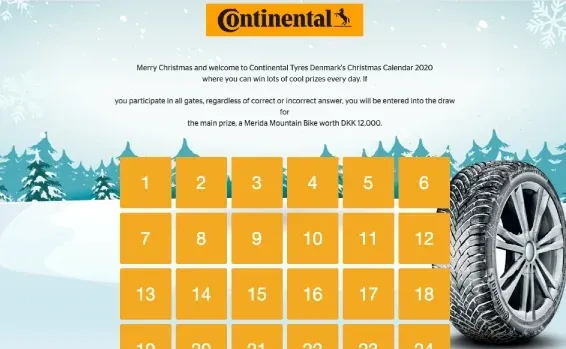
Tyres and Mobility: Continental's Christmas Calendar
Continental, a major brand in the mobility space, launched an online Christmas calendar that turned everyday digital interactions into sales opportunities. Each calendar door was an engaging quiz tied to exclusive offers. The campaign achieved a 130% increase in newsletter subscribers and a significant boost in online conversions. It attracted over 5,000 unique visitors, showing strong engagement in a niche audience.
Automotive: Toyota's Holiday Engagement Campaign
Toyota's online Christmas calendar combined festive storytelling with interactive surprises. The car manufacturer achieved a 97% conversion rate, proof that an immersive, holiday-themed experience can drive exceptional activation. Participants played on an average of 18 days each, so people didn't just join once. They came back almost every day.
How to Set It Up in Scratcher
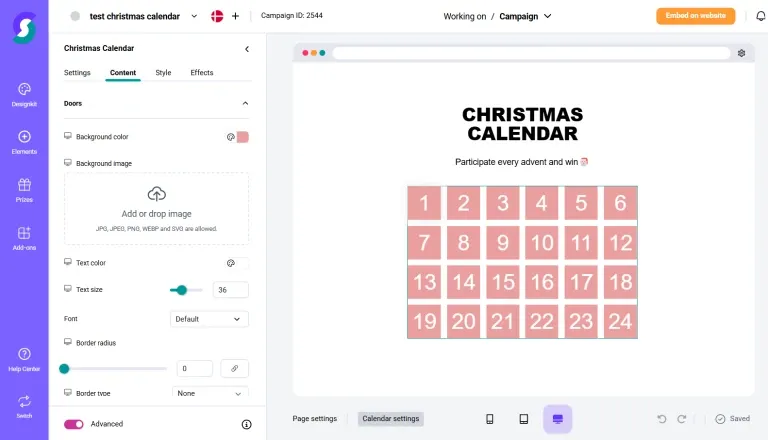
Start by adding a Game Page to your campaign and selecting the Christmas Calendar format. Then choose a layout that fits your campaign. Pick one of the existing templates or create your own from scratch to match your visual identity.
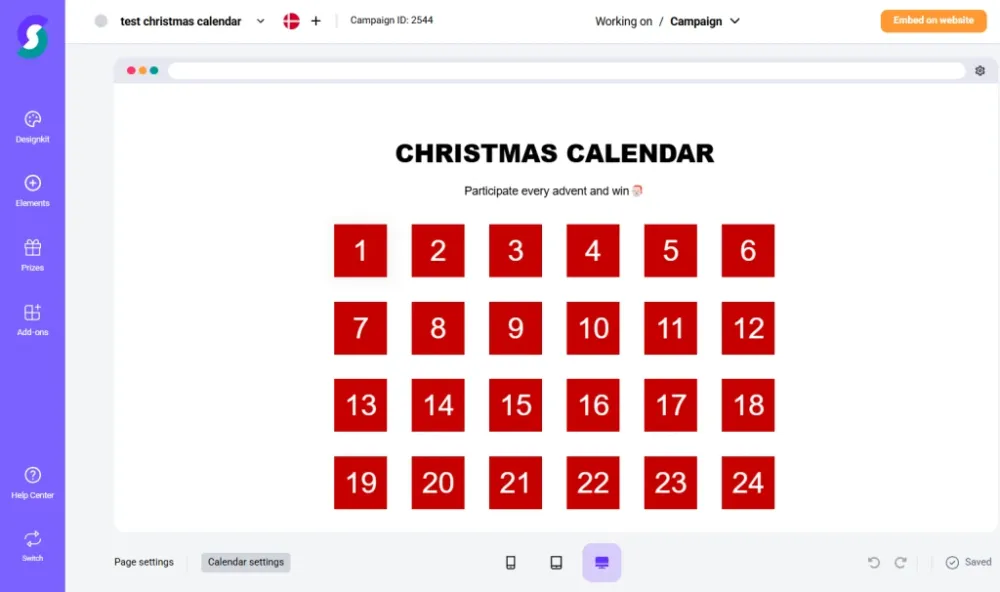
Next, choose the dates to display, such as 1–24 December. Then set the number of items per row and the content width. You can also add an image behind the doors and, in the settings, randomise the door order.
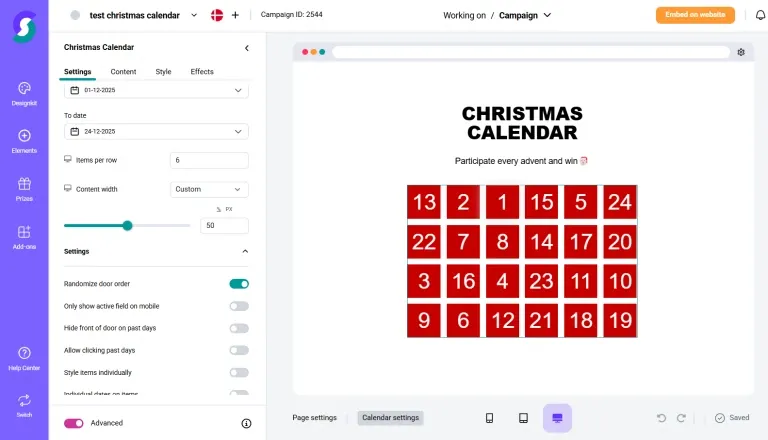
With the structure in place, it's time to design the doors. Each door can be styled with an image, text or colour, or a combination. You can adjust the gap between doors to get the spacing you want, and define how the calendar looks on desktop, tablet and mobile.
Implementation Strategies
On-Page Integration for Seasonal Landing Pages
Embed the calendar directly in high-traffic landing pages for a seamless holiday experience. Use a native embed so it loads quickly and matches your site's look. Place it above the fold or on product pages to draw people into daily engagement and give them a reason to come back.
Email-Gated Entry for Lead Generation
Ask people to sign up with their email (or phone number) to access the calendar. This turns engagement into qualified leads and lets you remarket throughout the holiday season. Use automated email sequences to remind participants to come back each day, which improves retention and visibility.
Multi-Channel Distribution with Daily Reveals
Promote each calendar day across several channels: social media, SMS, email and even in-store signage. Sync door reveals with your content calendar to build anticipation and stay visible. Each day can highlight a giveaway, a challenge or an exclusive discount.
Gamified Pop-ups for Daily Re-Engagement
Gamified pop-ups are a lively way to boost daily engagement with your calendar. Unlike static pop-ups, they can present daily challenges, mini-games or prize draws tied to each door. Shown in the right context, they remind people to return, play and see what's new. Their visual appeal and rewards make them effective for building daily habits and turning casual visitors into loyal participants throughout the festive season.
Start Planning Your Christmas Calendar
The best Christmas calendars are planned well before December. Pick your goal, decide on prizes for each door, and plan how you'll bring people back every day. For more ideas, read our tips for a successful advent calendar campaign.
Ready to build yours? Find a festive starting point in our templates, or start a free 14-day trial and set up your calendar in the editor, no coding needed.