



In the UK, a prize draw is free to enter and the winner is picked by chance, a prize competition is won by skill, knowledge or judgement, and a lottery is an arrangement where people pay to take part and the prizes go by chance. Free draws and genuine prize competitions need no licence from the Gambling Commission. A promotion where people pay and chance decides the winner is a lottery, and the Gambling Commission says lotteries can't be run for commercial or private gain.
So prize draw vs competition comes down to two questions: does anyone pay to enter, and what decides who wins? This guide covers the Gambling Act 2005, the Gambling Commission's view on free entry routes and skill tests, and what the CAP Code expects from your promotion, with a checklist at the end.
This article is general information, not legal advice. Rules change, and the details of your promotion matter, so check with a lawyer before you launch.
Prize Draw vs Competition vs Lottery: The Short Version
| Lottery | Free prize draw | Prize competition | |
|---|---|---|---|
| Do people pay to enter? | Yes | No, or there is an equal free route | Can be either |
| What decides the winner? | Chance | Chance | Skill, knowledge or judgement |
| Can a brand run it to promote its products? | No, lotteries can't be run for commercial or private gain | Yes, no licence needed | Yes, no licence needed |
| Typical example | Charity raffle | "Enter your email to win" | Photo contest judged by a panel, hard puzzle |
What Makes Something a Lottery?
Section 14 of the Gambling Act 2005 defines a simple lottery as an arrangement where three things are all true:
- people have to pay to take part,
- one or more prizes go to some of the participants, and
- the prizes are given out by a process that relies wholly on chance.
The Act says this applies "irrespective of how it is described", so calling it a giveaway or a contest changes nothing. "Prize" covers money, goods and services.
The Gambling Commission says lotteries "cannot be run for commercial or private gain", and that a draw that doesn't meet the requirements may be an illegal lottery. So brand promotions remove at least one element: nobody has to pay, or chance doesn't decide the winner.
Section 339 adds that a prize competition is not gambling under the Act unless it is gaming, a lottery or betting.
What Counts as Paying to Enter?
Schedule 2 of the Act sets out what "paying" means. It includes paying money, transferring money's worth, and paying for goods or services at a price that reflects the chance to take part. In plain terms, "buy this product to enter" can count as payment.
Paying to find out whether you have won, or to collect a prize, also counts as paying to take part. Sending a letter by ordinary first or second class post, or calling or using another method at a normal rate (one that doesn't reflect the chance to enter), does not.
Why the Free Entry Route Matters
Purchase-linked promotions ("buy a pack, find a code, win") stay out of lottery territory with a free entry route. Paragraph 8 of Schedule 2 says an arrangement isn't treated as requiring payment when:
- everyone eligible can choose to enter by paying or by sending a communication instead,
- that communication is a letter by ordinary post, or another method that is "neither more expensive nor less convenient" than entering by paying,
- the choice is publicised so it is likely to come to the attention of everyone who wants to enter, and
- the way prizes are allocated doesn't treat paid and free entries differently.
The Gambling Commission's guidance adds that the free route "must be promoted and displayed at the same level as the paid for routes". A free route hidden in the small print doesn't do the job. If entry is free for everyone, as in "enter your email to win", there is no payment to begin with.
What Makes a Genuine Skill Test?
Section 14(5) says a process that needs skill, judgement or knowledge is still treated as relying wholly on chance if the requirement wouldn't reasonably be expected to prevent a significant proportion of people who take part, or want to take part, from winning or entering.
The Gambling Commission says the organiser must be able to show that the skill required will put off people who find it too difficult and will stop a proportion of entrants from winning. It is also direct about easy questions: "Multiple choice questions, or questions that allow a second chance if your first answer is wrong, rarely meet this criteria."
So "What color is our logo? A) Red B) Blue" is not a skill test, and paid entry plus an easy question plus a random draw among correct answers looks like a lottery. Whether your own test is hard enough is a question for your lawyer.
The CAP Code: What Your Promotion Must Tell People
Even a legal free draw has to follow the advertising rules. Section 8 of the CAP Code (Promotional marketing), enforced by the ASA, covers prize promotions in non-broadcast marketing, including websites and social media.
Significant conditions
Rule 8.17 says marketing that refers to a promotion must communicate all applicable significant conditions where leaving them out is likely to mislead. These include how to take part and any costs (8.17.1), any free entry route, explained "clearly and prominently" (8.17.2), the start date (8.17.3), a prominent closing date (8.17.4), proof of purchase (8.17.5), the number and nature of prizes (8.17.6), restrictions such as age or location (8.17.7), and the promoter's full name and correspondence address unless obvious or shown on a dedicated entry website (8.17.9).
Where space is limited, such as a social post, rule 8.18 asks you to include as much as you practically can and point people to the full conditions.
Closing date
Under rule 8.17.4, prize promotions are likely to need a closing date. You can only change it in unavoidable circumstances beyond your control. The ASA's guidance on closing dates says that not getting enough entries of sufficient quality by the deadline doesn't count. It also says a closing date that only appears in separate full terms is unlikely to be acceptable: put it in the ad itself.
Picking winners
- Prize draws (rule 8.24): prizes must be awarded according to the laws of chance. Unless a computer process that produces verifiably random results is used, winners must be picked by an independent person or under their supervision.
- Instant wins (rule 8.25): people must get their winnings at once, or know straight away what they have won and how to claim it without delay, cost or admin barriers. The promoter should be able to show, through an independently audited statement, that prizes were given out fairly and at random.
- Judged competitions (rule 8.26): where judging is subjective, use an independent judge or a panel with at least one independent member.
Winners and prize delivery
- Award the prizes: rule 8.15.1 says promoters must award the prizes as described, or reasonable equivalents, "normally within 30 days".
- Tell people before they enter (rule 8.28): any entry limit, whether a cash alternative is possible, the delivery date if it is more than 30 days after the closing date, how and when winners will be told, the judging criteria in a competition, and whether you will use winners in publicity.
- Show the draw was real (rule 8.28.5): promoters must publish or make available information showing a valid award took place, usually the surname and county of major winners. Tell people at or before entry, give them the chance to object or to limit what is published, and don't put winners' privacy at risk.
- Don't withhold prizes unless the winner didn't meet the qualifying criteria in your rules (8.27).
Practical Checklist for a UK Giveaway
- Payment: Does anyone pay, buy something, or post or call at more than a normal rate to enter, see if they won or claim a prize? Then add a Schedule 2 free entry route or use a genuine skill test.
- Free route: As cheap and convenient as the paid route, promoted equally, treated equally in the draw?
- Skill: Would the test really stop a significant share of people from winning?
- Significant conditions: Closing date, prizes, eligibility, how to enter and promoter details in the promotion itself? Our competition terms and conditions checklist has the full list.
- Winners: Verifiably random or independently supervised draw, independent judge for subjective judging, prizes within 30 days unless stated, winner information made available.
- Data: Go through consent and data use with your adviser; see competitions and GDPR.
- Legal check: Have a lawyer review the mechanic and terms.
How Scratcher's Prize Mechanics Map onto the Categories
The legal category depends on how you set up the promotion, not on the tool. Assuming entry is free, the mechanics usually line up like this:
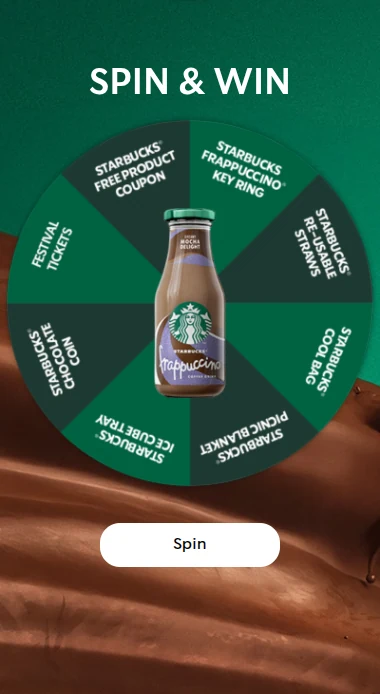
- Instant win (scratch card, spin the wheel, mystery box): chance decides, so legally a free draw. Purchase-linked? Add a free entry route. CAP rule 8.25 applies. More in instant win vs prize draw.
- Automatic prize draws (daily, weekly, at the end): a free draw, with rule 8.24 on picking winners.
- Quiz with a draw among correct answers: with easy questions, treat it as a free draw, not a skill competition.
- Skill draws (best scores on a leaderboard or skill game): closer to a prize competition, as performance decides. Ask your lawyer whether it is a genuine skill test.
- Photo competitions judged by people: subjective judging, so rule 8.26 applies.
You set up instant win prizes, draws and skill draws in prizes and winners, and export winners and entries if you need to document how a draw ran. One entry per email or phone number and play limits help you keep to the entry limits in your terms. You write your own terms and consent texts and you are responsible for your campaigns. For the full process from idea to winner, see how to run an online competition.
FAQ
Is a giveaway legal in the UK?
Yes, in general. The Gambling Commission says you don't need a licence or permission to run a free draw or prize competition as long as it meets the requirements of the Gambling Act 2005. It must also follow the CAP Code. A giveaway where people pay to enter and the winner is picked by chance is a lottery, which is a different matter.
Is "buy to enter" a lottery?
It can be, if chance decides the winner. Under Schedule 2, paying for goods at a price that reflects the chance to enter counts as payment, so you need a proper free entry route.
Is a multiple choice question enough to make it a competition?
Usually not. The Gambling Commission says multiple choice questions, or questions that give a second chance, rarely meet the skill test.
Run Your Next UK Giveaway with Scratcher
Pick a format, set your prizes and draws, add your terms and publish. See what's possible with online competitions and giveaways, start your free trial or book a meeting and we'll walk you through it.