


Restaurants and quick-service brands compete in one of the busiest markets there is. Every chain has an app, a loyalty programme and a "deal of the week". Guests are hungry, in a hurry and spoilt for choice. If you are looking for restaurant marketing ideas that do more than add another discount, gamification is worth a closer look.
A game turns a passive offer into something people choose to take part in. It can bring guests to the counter, get them into your app, help launch a new product and give you contact details you can use again. In this guide we cover the main challenges in QSR marketing, five practical ways to use games, a real example from Burger King and the KPIs to follow.
QSR marketing challenges
Quick-service restaurants share a few problems that make marketing harder than it looks.
Banner blindness and deal fatigue
Guests see the same type of offer from every chain: a burger, a price and a "limited time" label. After a while, it all blurs together. Price-led ads also train guests to wait for the next deal.
Anonymous guests
Many guests pay at the counter or kiosk and leave. Unless they use your app or loyalty programme, you do not know who they are and cannot reach them again.
Expensive app growth
Most chains want more app users, because the app is where loyalty, ordering and personal offers live. But getting people to download it, sign up and come back is hard work.
Launches that need trial
A new burger, drink or menu item only succeeds if people try it. Traditional launch events reach one location for one day.
Busy kitchens
A promotion that is too successful in one restaurant at one time can create long queues and an overloaded kitchen, which hurts the guest experience.
Gamification helps with all of these, because it gives guests a reason to engage, collects data with consent and lets you control how prizes are spread over time and locations.
Restaurant marketing ideas: in-store QR games
Your restaurant is full of moments where guests wait: in the queue, at the table, while their order is being prepared. That is the perfect time for a quick game.
Put a QR code on:
- Tray liners and table signs: "Scan and win your next meal."
- Packaging and cups: a game that follows the guest home.
- Receipts: an invitation to play for a reward on the next visit.
- Screens and posters near the counter or the drive-through window.
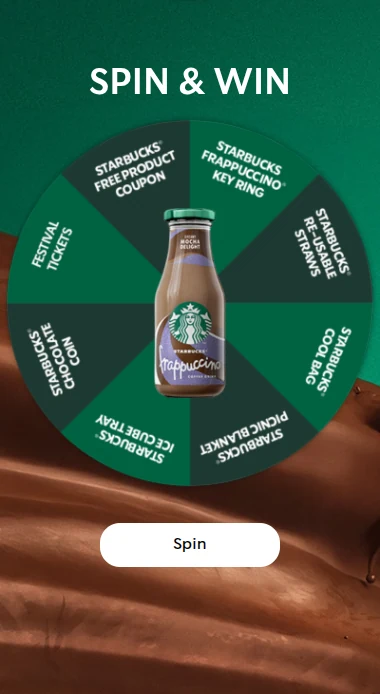
Guests scan with their phone camera and play right away in the browser. No app is needed. They fill in a short form, give their consent if they want to hear from you and play a scratch card, a wheel or a mystery box.
Winners get a unique discount code or a barcode on their phone that they show at the counter. If you use a separate link and QR code per restaurant, you can see which locations bring the most players in near real time. Read more about QR code campaigns.
Ask for feedback while it is fresh
A rating game lets guests rate a dish, a new menu item or their visit with one tap per question, using stars, emojis or your own icons. Put the QR code on the table or the receipt, and reward everyone who takes part with a small prize. You get far more feedback than with a long survey, and a list of guests you can thank and invite back.
App onboarding and push
If your app is the heart of your loyalty strategy, a game can be the door into it.
Ideas for app growth
- Play to download. Promote a game on social media and outdoor ads, where the prize is an app-only offer. To claim it, guests download the app.
- A welcome game. Put a game inside your app or behind your login for new users only. A guaranteed small prize on the first visit makes onboarding feel like a gift.
- A reason to open the app again. Link to a new game from your push notifications or in-app messages, for example a weekly draw or a monthly game. You send the push from your own app tools, and the game gives people a reason to tap it.
You can embed a Scratcher campaign on your website, in your app or share it as a link in newsletters and SMS. That makes it easy to use the same game across channels.
Wolt: gamification as more than a voucher
Food delivery platform Wolt ran a mystery box winter campaign over two months, using in-app banners, outdoor ads, performance marketing and influencers to drive traffic. More than 200,000 people took part. The campaign boosted marketing permissions by 150% compared with the starting figures, and Wolt Plus subscriptions rose by 16%, helped by offering Wolt Plus as a consolation prize. Among new users, 44% of unique visitors took part. Wolt's Marketing Manager found that the gamified approach was more attention-grabbing than regular discount campaigns. Read the Wolt story.
Product launches and sampling
A new product needs trial. A game can deliver trial across all your restaurants at once, instead of one big event in one place.
The mystery box launch
A mystery box works well for launches. Guests pick a box and see what is inside: a free sample of the new product, a discount on a meal, or a small reward. Because the result is a surprise, the moment feels exciting, and the free product is the star.
Give two types of prizes:
- Free product coupons to drive trial of the new item
- Discount coupons for other products to drive visits and bigger baskets
Spread the visits
Use the prize settings to control how many prizes can be won in total and when they are given out. Spreading prizes over several days stops everyone from turning up on day one and keeps the kitchens running smoothly.
Case example: Burger King's Whopper launch
When Burger King relaunched its improved Whopper in Denmark and Sweden, the goals were to boost quality perception and drive product sampling. Instead of a big PR event in one restaurant, Burger King chose a nationwide gamified approach.
The campaign used the mystery box format over seven days. People played online with daily chances to win a free Whopper or discount coupons for other products. Paid media and social media boosted the reach.
The results:
- 140,000+ unique participants
- 6,292 people tried the new Whopper for free
- 45.5% of the free Whopper coupons were redeemed across Denmark and Sweden
- 9% more orders that included a Whopper during the campaign
- 4% more orders with coupons during the campaign week, the highest in the past year
Burger King's Head of Marketing for Denmark and Sweden, Mila Hvilshøj, said the campaign had one of the lowest CPMs they had ever seen. Spreading the campaign online also spread the visits over days and locations, which helped manage the kitchen workload. And the permission base grew significantly, even though that was not an original goal.
Read the full story: reinventing product sampling: Burger King's gamified Whopper launch.
Loyalty tie-ins
A game is a great way to give your loyalty programme a pulse. Points and stamps are useful, but they are not exciting on their own.
Ideas
- Make joining the club the way to play. Ask people to join your loyalty programme in the sign-up form, with consent, and give members a better prize or an extra chance to win.
- Member-only games. Put a monthly game behind your login or in your app, so only members can play.
- Seasonal calendars. A Christmas calendar or a summer calendar with a new door every day gives members a reason to open the app daily.
- Wake up quiet members. Send a game to members who have not ordered in a while. A chance to win is a friendlier reason to come back than "we miss you".
Send new members and their answers to your CRM with a native integration, Zapier, webhooks or the API, so the data feeds your loyalty programme. See more ideas on our customer loyalty page.
KPIs for restaurant gamification
Pick the KPIs that match your goal before you launch:
- Participants and participation rate: how many people played, and the share of visitors who did
- New permissions: guests you can reach again
- Coupon redemption rate: how many won coupons were used in the restaurants
- Product orders during the campaign: for launches, the change in orders for the new item
- App downloads and new members linked to the campaign
- Results per restaurant, using separate links and QR codes
- Media efficiency: for example CPM or cost per participant compared with your other campaigns
Our guide to gamification marketing KPIs explains what each number tells you.
Turn hungry guests into loyal ones
The best restaurant campaigns give guests something to look forward to, not just something to buy. A QR code on the table, a mystery box for your next launch or a monthly game in your app can do more for loyalty than another price cut.
Want to try it? Start a free 14-day trial and build your first restaurant campaign from a template, or book a meeting to plan a launch with our team.