


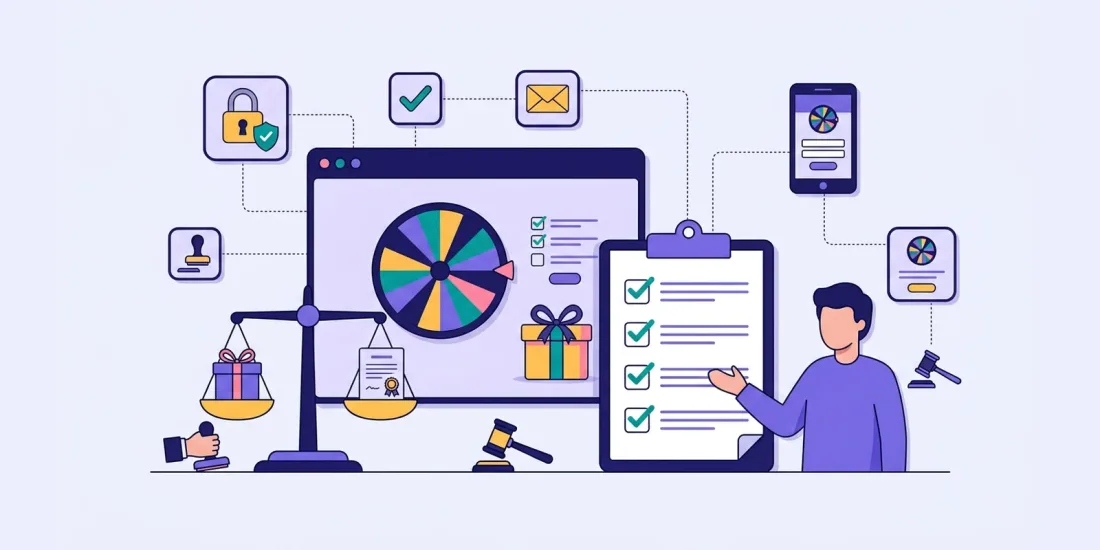
Before you run an online competition in Denmark or the EU, check how you collect marketing consent, what you tell participants, whether tagging or sharing on social media is allowed, and whether gambling or tax rules apply to your prizes. In Denmark, the Consumer Ombudsman publishes guidance on consent. Rules differ between countries and change, so get legal advice before you launch.
Competitions are one of the most effective ways to collect sign-ups, but they also raise questions about consent, marketing, prizes and, in some cases, gambling and tax. If you use a prize to get people to say yes to your newsletter, it pays to check the rules before you go live. This guide walks through the main topics to look into for Denmark and the EU, with links to official authorities where you can read more, so you know what to ask before you launch.
Disclaimer and scope
This article is general information, not legal advice. Rules differ between countries, change over time, and how they apply depends on your campaign, your prizes and the markets you run in. We focus on:
- Online competitions and giveaways used to collect marketing consent
- Denmark first, with notes on the EU and a few neighbouring markets
- Consumer-facing campaigns (B2C)
If your campaign targets children, involves paid entry or runs in many countries, involve a lawyer early.
Consent: make it clear and specific
In Denmark, the Consumer Ombudsman (Forbrugerombudsmanden) publishes guidance on marketing, including on using competitions to collect consent to marketing. You can find the current guidance on forbrugerombudsmanden.dk. Read the latest version yourself, as guidance is updated over time.
Questions worth working through with your legal adviser:
- How do you link the prize and the consent? Decide whether consent is optional or part of the entry, and how you make that clear to participants.
- How visible is the consent request? Think about where on the screen the consent text appears compared with the prize, and whether people see it before they type in their details.
- How do people opt in? Consider how participants actively give consent, for example with a checkbox they tick themselves.
- Where does the consent text live? Think about whether it is shown in the sign-up form itself or only in the terms or privacy policy.
- How specific is the wording? Consider whether the text makes clear who will contact the person, through which channels and about what.
The GDPR in general
In general, the GDPR expects consent to be freely given, specific, informed and unambiguous, and people should be able to withdraw it. The European Data Protection Board publishes guidelines on consent that explain how it reads these ideas. How they apply to your specific set-up is a question for your legal adviser.
Many brands choose to use a separate, unticked consent box that people can leave empty and still play. It may give you fewer permissions per participant, but the ones you get are clearer. Whatever you choose, get legal advice on your exact set-up.
What to tell participants
Beyond the consent text itself, participants need enough information to understand what they're entering. Typical information to make easy to find:
- Who is behind the competition and how to contact them
- What people can win, how many prizes there are and how winners are chosen
- When the competition starts and ends
- Who can take part (age, country, employees excluded and so on)
- How their personal data is used, with a link to your privacy policy
- How they can withdraw their consent
Other topics worth checking with your legal adviser:
- Withdrawing consent. What happens to an entry, prize or discount if someone withdraws consent?
- Documentation. How will you document how and when consent was given, and for how long will you keep that record?
- Old consents. How long do you rely on a consent you haven't used for a while?
- Children. What applies if children can take part or receive marketing?
The terms and conditions are where the details live. See our competition terms and conditions checklist for the topics people usually cover.
Social media: tagging and sharing
Running a competition on Instagram or Facebook? Asking people to tag friends or share a post as a condition of entry is an area where rules and authority views differ between countries and can change. Check the current guidance from the relevant consumer authority, as well as the platform's own rules, before you use these mechanics.
A simple alternative: post the competition on social media but let people enter through a link to a game with a proper sign-up form. You collect sign-ups in a form you control, the participant gets a clear choice, and nobody gets tagged without being asked.
Prize draws, odds, gambling and tax
Whether a competition is treated as gambling, and whether prizes trigger tax or duty, depends on the country, the prize values and how the competition works, for example whether people have to pay or buy something to take part. These rules change, so check the current position before you launch.
Denmark. The Danish Tax Agency has information for businesses that offer games on skat.dk, and its legal guidance is available on info.skat.dk. Check the current rules for your prizes with the Danish Tax Agency or your adviser.
Practical points for any market:
- Check before you require a purchase. A purchase requirement can change how a competition is treated, so check the local rules first.
- Keep the odds honest. If the game says "1 in 10 wins", the prize set-up must match. Set how many prizes there are and when they can be won, so there's still something to win at the end.
- Instant wins vs draws. For draws, say when the draw happens and how winners are picked. For instant wins, say how many prizes there are in total.
In Scratcher, you decide how many of each prize can be won, when they can be won and how often each person can play. Draws can run automatically on the days you choose.
Country differences to check
If you run the same campaign in several countries, check each market separately. A few places to start reading:
- Sweden. The Swedish Gambling Authority has information about when a licence is needed.
- Norway. The Norwegian Consumer Authority has a guide to using competitions in marketing.
- Germany. Check the national rules on email marketing and consent, and how you will document consent, for example with double opt-in.
- Everywhere in the EU. Data protection rules apply to the personal data you collect, alongside the local marketing rules.
Checklist before you launch
Use this as a list of topics to go through with your legal adviser, not as a compliance checklist:
- Is it clear who is behind the competition and how to contact them?
- Does the consent text make clear who will contact people, how and about what?
- How do people actively opt in, and where is the consent request shown?
- If consent is part of the entry, how is that made clear?
- How can people withdraw consent, and what happens to their entry or prize?
- How will you document when and how each consent was given?
- Do the terms cover eligibility, period, prizes, how winners are chosen and contacted, and data use?
- Do you use tagging or sharing on social media, and have you checked the current rules?
- Is a purchase required, and have you checked the local rules?
- Have you checked prize values against current tax and duty rules?
- Can children take part, and what applies if they do?
- Do you have a data processing agreement with every tool that handles participant data?
How Scratcher helps
No tool can make a campaign compliant for you. You decide the audience, prizes, texts and terms, and you are responsible for your own campaigns. Scratcher gives you settings that help you collect sign-ups the way you have decided to. In Scratcher you can:
- Write your own consent texts and choose which fields are required
- Link your terms from the sign-up form, either to your own website or to a page inside the campaign
- Use double opt-in for newsletter sign-ups (Email module: included on Professional, or as an add-on)
- Limit how often each person can play and use reCAPTCHA and verification codes against cheating
- Decide when player data is deleted
Scratcher acts as your data processor under a data processing agreement, is certified to ISO/IEC 27001:2022 and hosts data in the EU. Read more on our security and GDPR page.
Ready to build a competition? Try Scratcher free for 14 days, or book a meeting and we'll show you how to set up consent and prizes.
This article is general information, not legal advice. Rules differ between countries and change over time, so check the current rules and get legal advice before you launch a campaign.