


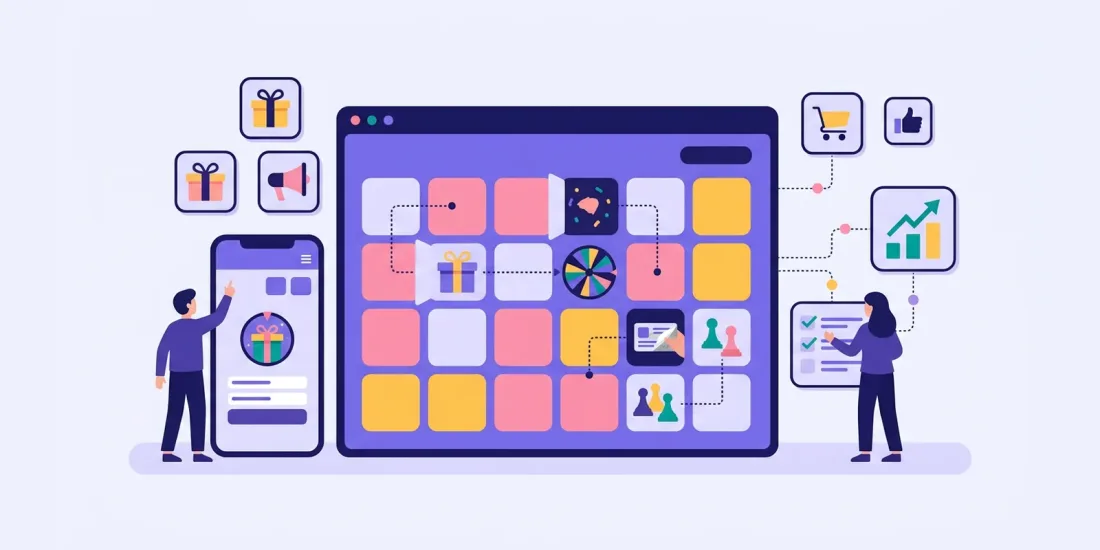
A successful Advent calendar campaign starts with one primary objective and one simple format, planned at least two months ahead. Run a pre-launch campaign before 1 December, use auto-submit so returning players can take part with a single click, send reminders when new doors open, choose prizes wisely and monitor the results in real time throughout December.
Looking for better ways to reach your audience in a season when everyone is fighting for attention? Here’s how to use an Advent Calendar to hit a range of marketing goals.
What Is an Interactive Advent Calendar?
An interactive Advent Calendar is a format built to keep people coming back. Take the Toms Advent Calendar campaign for Christmas. The confectionery brand opened a new door every Advent Sunday, revealing a new competition or fresh content each time. An online Advent Calendar is a great way to collect new marketing permissions and to strengthen engagement and loyalty at the same time.
Video: the Toms online Advent Calendar opening its doors on an iPad.
Now that you know what the format is, here are ten tips for designing an Advent Calendar campaign that performs.
10 Tips for Your Advent Calendar Campaign
1. Decide on One Primary Objective
Your campaign can serve several purposes and track several KPIs. But one primary objective, with two or three secondary goals, keeps the experience focused. Objectives this format can help with:
- Lead generation and email subscribers
- Data enrichment (update your CRM or CDP with fresh information and preferences)
- Brand engagement (every door is a new chance to connect)
- Sales
- Loyalty and retention
2. Keep It Simple
A different game every day sounds appealing, but it quickly gets complex and time-consuming, and it puts more pressure on results to justify the effort. Pick the format that fits your goal and make the most of it.
3. Start Planning Early
An Advent Calendar involves a lot of choices. Start early so the campaign runs smoothly. If you build it yourself, we recommend starting at least two months ahead. Or we can build it for you: send us your brand kit and we’ll take care of the rest.
4. Run a Pre-Launch Campaign
Promote your calendar and collect permissions before 1 December. A teaser campaign encourages early sign-ups so you have an audience from day one.
5. Use Auto-Submit
Don’t make participants fill in the form every time they visit. Auto-submit pre-fills their details, so returning players can take part with a single click.
6. Plan Your Promotion
Even a great Advent Calendar falls flat without promotion. Combine owned and paid media, and choose channels that fit your industry. B2C brands might use Facebook, Instagram or TikTok. B2B brands might use LinkedIn Ads or Google. Whatever you choose, add a pop-up to your website and feature the calendar in your newsletters.
7. Send Daily or Weekly Reminders
Send a reminder each time a new door opens, daily or weekly depending on your calendar. You can automate reminders in Scratcher or connect Scratcher to your email tool, such as Mailchimp or ActiveCampaign. Both are quick to set up.
8. Set Up Tracking Pixels
Tracking pixels give you the full picture. You can follow participants’ journeys before they arrive at your calendar and after they leave.
9. Choose Your Prizes Wisely
You don’t need extravagant daily prizes. The overall experience often matters more. Smaller prizes, or one big prize draw on 24 December, can still deliver strong results. As a rough guide to redemption:
- Free products: the highest engagement, with redemption often above 90%.
- Vouchers with no minimum spend: moderate engagement, around 60–70% redemption.
- Vouchers with a minimum spend: lower engagement but good for sales, with redemption anywhere from 20% to 70%.
10. Monitor Results in Real Time
Most Advent Calendars run all through December, so watch the numbers as you go and adjust while the campaign is live. Metrics worth checking:
- Unique participants: how many people took part each day.
- Conversion rate: from visitor to participant.
- Prize redemption rate: discount vouchers, consolation prizes, free gifts and so on.
- Time spent with the brand: how long people engaged with your brand and products. Formats like the Memory Game, Puzzle and Quiz tend to hold attention longest.
- Database growth: how much your email list grew.
Ready to Build Your Calendar?
For more inspiration, read our online Christmas calendar guide, or browse our templates and get your Advent Calendar up and running.