


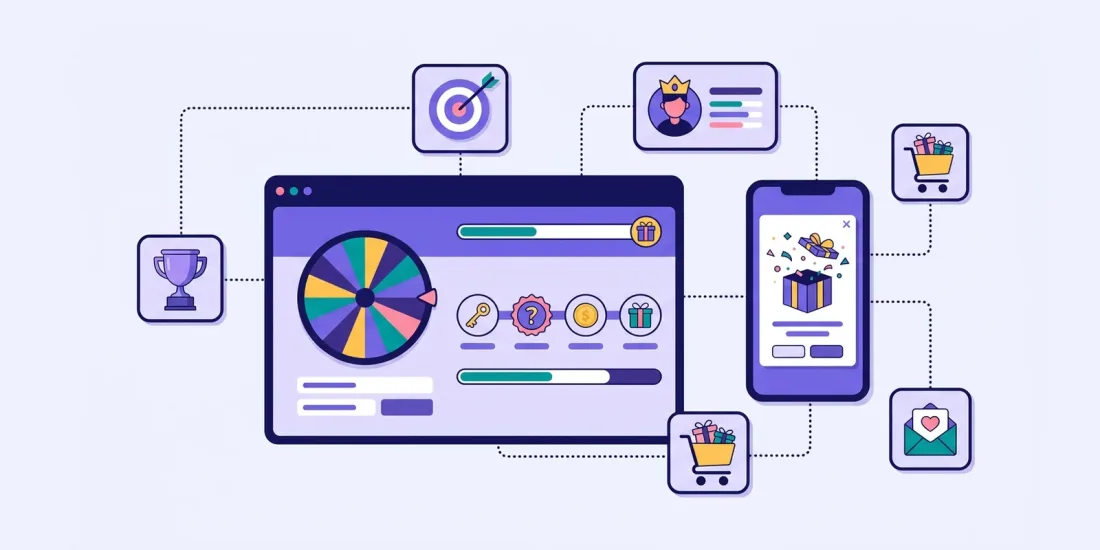
Gamification marketing is the use of game elements, such as a prize to win, a score to beat or a door to open, in your marketing so that people take part instead of scrolling past. Instead of asking for an email with a plain form, you invite people to scratch a card, spin a wheel or answer a quiz, and they leave their details along the way.
In this guide, we explain what gamification marketing is (and what it is not), why it works, which types of games you can choose from, where to use them and how to launch your first campaign.
What Is Gamification Marketing?
The most cited academic definition of gamification comes from a 2011 paper by Deterding, Dixon, Khaled and Nacke: the use of game design elements in non-game contexts. Gamification in marketing applies that idea to campaigns. You take something people normally find boring, like a sign-up form, a survey or a product page, and add an element of play.
In practice, a gamified campaign is usually a short game that runs in the browser. People find it on your website, in a pop-up, in a newsletter, on social media or through a QR code in your shop. They play, they can win something, and they choose to share their details or answers with you.
What Gamification Marketing Is Not
It is easy to mix gamification marketing up with other things, so here is what it is not:
- It is not building a video game. A gamified campaign takes seconds or a few minutes to play. You don't need a game studio or developers.
- It is not a lottery ticket you sell. The campaigns we talk about here are free to enter. People give their attention and, if they want, their consent. They do not pay to play.
- It is not a trick. Good gamified marketing is open about the deal: here is a fun game and a chance to win, and here is what we'd like in return.
Why Games Change Behaviour
People skip ads and abandon forms, but most of us like to play. Gamified marketing works because it changes the exchange. A normal form asks for something and gives nothing back. A game gives first: a fun minute, a moment of suspense and a chance to win.
A few things are at work:
- Curiosity. Not knowing what is behind the scratch layer or where the wheel will stop makes people want to find out.
- Reward. A prize, a discount code or a personal result gives people a reason to finish.
- Motivation. Beating a score, getting the right answer or coming back for tomorrow's door taps into the wish to feel competent and in control.
The Three Game Families: Luck, Knowledge and Skill
Scratcher has 40+ interactive formats, and they fall into a few families. Picking the right family is the first decision you make.
Luck-Based Games
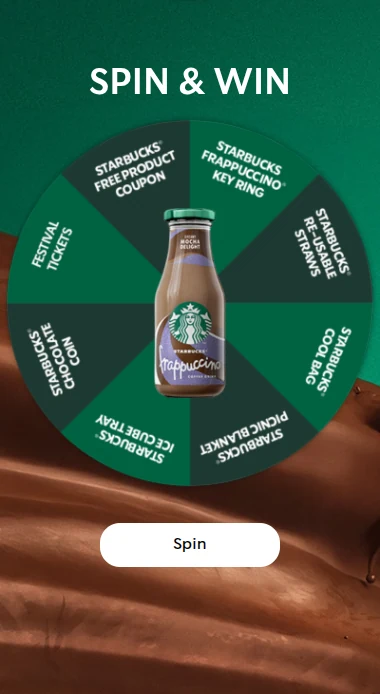
Scratch cards, spin the wheel, slot machines and mystery boxes. People see right away if they won. They take seconds to play, so they are great for growing a newsletter list and handing out discount codes.
Knowledge-Based Games
Quizzes, personality tests, polls and product finders. People answer questions, and every answer tells you something about what they like. They work for both B2C and B2B and are the best choice when you want to teach people about your products or collect preferences.
Skill-Based Games
Memory, drop games, puzzles and hit the target. People play for longer and try to beat a high score, often with a leaderboard. Good for brand awareness and social media.
Calendars and Special Formats
Christmas, advent and campaign calendars put a new game behind a new door every day or week, so people come back again and again. Toyota's Christmas calendar is a good example: participants came back on 18 of the 24 days on average.
Where Gamified Campaigns Live
One campaign can be shown in several places. In Scratcher, every format works as a landing page, as a pop-up and embedded on your website. From there you can share it almost anywhere:
- On your website. Embed the game on a page or show it in a pop-up when a visitor scrolls, waits a few seconds or is about to leave (exit intent works on desktop).
- In a pop-up. A game pop-up feels like a small gift rather than another form.
- In your newsletter and SMS. Give subscribers something to do, not just something to read.
- On social media. Share the link in an organic post, a story or an ad.
- In your shop and at events. Print a QR code on a poster, a receipt or a product. People scan and play on their own phone.
Use a separate link for each channel, and you can see which one brings the most players.
What You Get Out of It
Gamified marketing is not just about fun. Here is what brands use it for, with real results from our customers.
Leads and Consent
The most common goal is growing your email list with people who have actually said yes to hearing from you. Fleggaard's spin the wheel campaign had 34,000 unique participants, and 21,000 of them signed up for the newsletter. Read more about lead generation with Scratcher.
Zero-Party Data
When people answer a quiz or a personality test, they tell you what they like, what they own and what they plan to buy. That is zero-party data: information people choose to share themselves. Toyota Denmark built a consent-based data engine on quizzes and surveys, with 22,352 participants completing the final survey.
Sales
Discount codes and consolation prizes turn players into buyers. Rascals Brewing ran a branded wheel of fortune and reported a 259% ROI and 35% growth in order volume.
Loyalty
Games give members a reason to come back. Jacobsen Møbler grew its loyalty club from 25,000 to around 120,000 members with year-round campaigns.
Attention
A game holds attention for minutes, not seconds. Andel Energi's Easter campaign had 55,000 participants who spent a total of around 2,467 hours with the brand.
How to Launch Your First Gamified Campaign in Five Steps
You don't need a big project to get started. Here is a simple plan.
- Pick one goal. Sign-ups, data, sales or engagement. The goal decides the format and what you measure. Our article on gamification marketing KPIs helps you choose the right numbers.
- Choose a format that fits. A luck game for quick sign-ups, a quiz or personality test for data, a calendar for daily visits, a skill game for time spent with your brand.
- Choose a prize people want. It doesn't have to be expensive. A discount code, a free product or a weekly draw is often enough. Think about a consolation prize so nobody leaves empty-handed.
- Keep the form short and the consent clear. Ask only for what you will use, write a clear consent text and consider double opt-in so every email is real.
- Put it where your audience already is. Start with one or two channels, such as a website pop-up and your newsletter, then add social media or QR codes.
In Scratcher you start from one of 150+ templates, and Rex, our AI assistant, adds your logo, colours and fonts from your website and writes the texts. Sign-ups go straight to your email tool or CRM through native integrations or Zapier. See how it all fits together on the platform page.
FAQ
What is gamification marketing in simple terms?
It is marketing that uses game elements, like a prize, a score or a surprise, to get people to take part. Instead of reading an ad or filling in a form, people play a short game and share their details or answers along the way.
Is gamification marketing only for B2C brands?
No. Knowledge games like quizzes work well in B2B. Continental ran a Christmas calendar quiz for its Danish dealers and grew its B2B newsletter subscribers by 130%.
Do I need to give away expensive prizes?
No. Many campaigns use discount codes, free products or a small weekly draw. What matters most is that the prize fits your audience.
How should I handle data and consent?
Ask clearly for consent, only collect what you need and tell people how you will use their data. Scratcher lets you write your own consent texts, use double opt-in and decide when data is deleted. These tools help, but you are responsible for your own campaigns, and rules differ between countries, so get legal advice on your set-up.
How long does it take to launch a campaign?
It can be quick. Dansk Outlet decided late to run an Easter campaign and was live in under a week with a scratch card that got 13,000 sign-ups.
This article is general information, not legal advice. Rules differ between countries and change over time, so check the current rules and get legal advice before you launch a campaign.
Ready to Try It?
The best way to understand gamification marketing is to build a campaign yourself. Start your free 14-day trial, pick a template and see how quickly your first game can go live. No credit card required.