


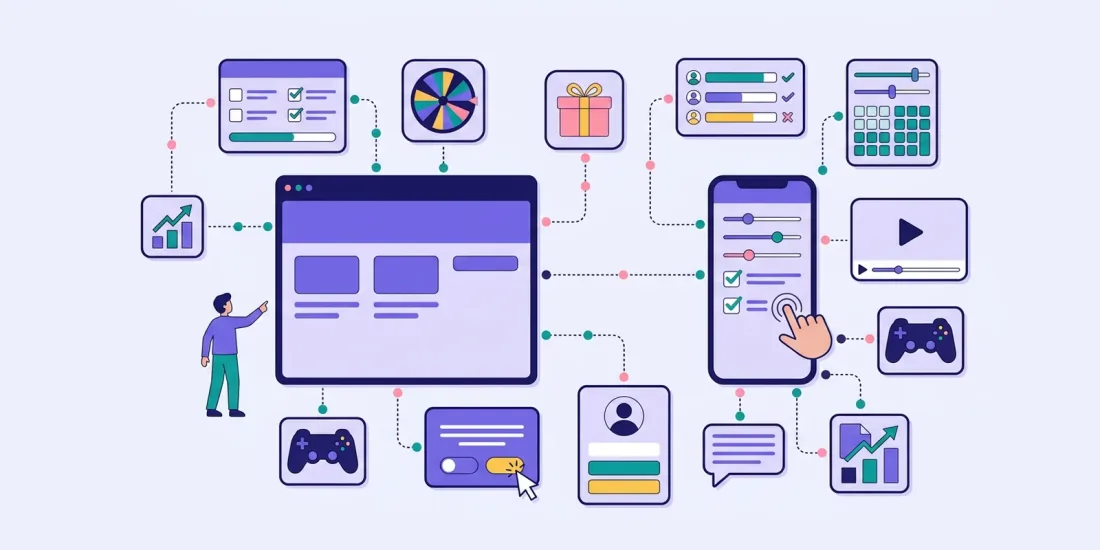
Interactive content is content people do something with, instead of just reading or watching it. They answer a question, pick a favourite, spin a wheel or open a door, and the content responds to what they did. A quiz is interactive content. A blog post is not.
In this guide we explain what interactive content is, why it often beats static content, the 12 most useful types of interactive content with examples, and how to pick, share and measure them.
What Is Interactive Content?
Interactive content asks for an action and gives something back. That simple loop is what makes it different:
- Static content: you publish it, people consume it, and you hope they remember it.
- Interactive content: people take part, get a personal result or a reward, and often share something about themselves along the way.
In interactive content marketing, that loop is built around a goal: sign-ups, data, sales or time spent with your brand.
Why Interactive Beats Static Content
Not every piece of content needs to be interactive. But when you want people to act, interactive content has some clear advantages:
- It holds attention longer. People spend minutes, not seconds. WWF Denmark's "What is your spirit animal?" personality test had an average engagement time of 2 minutes and 33 seconds.
- It gives you data. Every answer, vote and choice tells you something about the person.
- It turns attention into sign-ups. Asking for an email after a fun minute and a chance to win feels fair. Asking with a plain form does not.
- It brings people back. A calendar or a weekly competition gives people a reason to return.
- It teaches without lecturing. A quiz makes people want to know the answer.
Read more about how this builds preference over time on our brand engagement page.
12 Types of Interactive Content (with Examples)
Scratcher has 40+ interactive formats. Here are 12 types that cover most goals.
1. Quizzes
Questions with right and wrong answers, or answers that lead to a result. Quizzes teach people about your products while you collect sign-ups. Continental ran a daily quiz in a Christmas calendar for Danish dealers and got a 93% conversion rate from visitors to participants.
2. Video Quizzes
A quiz built around your own videos. People watch, answer and see their score. Because they want to get it right, they pay much more attention than when they scroll past a clip.
3. Personality Tests
A quiz with no wrong answers. The answers add up to a personal result, like a profile, a character or a matching product. Fun to take and fun to share.
4. Product Finders
A product recommendation quiz. People answer a few questions and see the products that fit. Zapp used a charging box quiz to help EV buyers choose a charger, and 10% of participants went on to buy.
5. Polls
One question, a few answers, and people can see the results right away. The quickest way to hear what your audience thinks.
6. Surveys
Several questions, one at a time, with pictures and ratings. The customer survey people actually want to finish. nemlig.com's five-question product survey had a response rate above 35%.
7. Vote Games
People vote for their favourite product, design, idea or nominee. Perfect for awards, product decisions and community campaigns.
8. Swipe, Rate and Battle Games
Quick preference games: swipe right or left on products, give a score with one tap, or pick between two options round after round. Every choice is a data point.
9. Luck Games
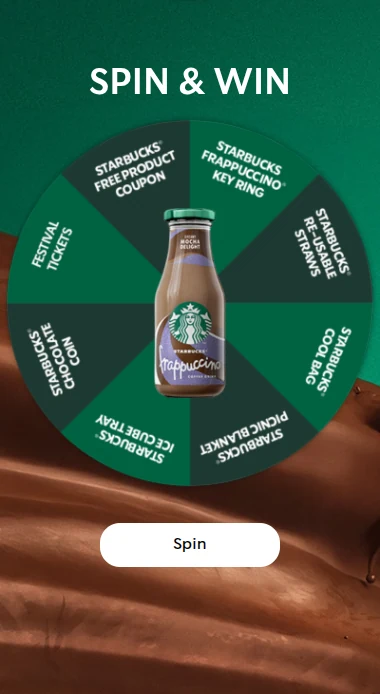
Scratch cards, spin the wheel, mystery boxes and slot machines. People see right away if they won. The fastest way to grow a list. Fleggaard's spin the wheel had 34,000 unique participants and 21,000 newsletter sign-ups.
10. Skill Games and Leaderboards
Memory, drop games, puzzles and hit the target. People play for a high score and come back to beat it, especially with a leaderboard.
11. Interactive Calendars
Christmas, advent and campaign calendars with a new game or prize behind each door. Toyota's Christmas calendar had 450,375 doors opened.
12. Prediction Games
People guess the result of a match before the deadline, and a leaderboard gives points for the right result. Great for sports sponsors and big tournaments.
Choosing a Type by Goal
Start with what you want to achieve, then pick the type:
- Grow your list fast: luck games like a scratch card or spin the wheel.
- Learn what customers want: personality tests, product finders, surveys and polls.
- Sell more: product finders and luck games with discount codes.
- Teach and build preference: quizzes and video quizzes.
- Bring people back: calendars, leaderboards and weekly competitions.
- Engage fans and communities: vote games and prediction games.
Not sure? Start with one simple format and one goal, then test something new in your next campaign.
Distribution Channels
Interactive content only works if people find it. The good news is that the same campaign can live in many places. In Scratcher, every format works as a landing page, a pop-up and embedded on your website:
- Website pop-up: show the game when visitors scroll, wait a few seconds or are about to leave.
- Embedded on a page: put the game on your front page, a product page or a blog post.
- Newsletter and SMS: give subscribers something to play, not just something to read.
- Social media: share the link in an organic post, a story or an ad. Dansk Outlet got 13,000 participants from a webshop pop-up and one organic Facebook post.
- QR codes: on posters, packaging, receipts and at events. People scan and play on their own phone.
Use a separate link for each channel, so you can see which one brings the most players. For more ideas on planning across channels, read maximising your interactive marketing strategy.
Measuring Interactive Content
Interactive content is easier to measure than most content, because every action is counted. Track a few numbers that match your goal:
- Visitors: how many people saw the campaign.
- Participants: how many took part.
- Conversion rate: the share of visitors who took part and signed up.
- Sign-ups and permissions: how many said yes to hearing from you.
- Engagement time: how long people spent with it.
- Repeat visits: how often people came back, especially in calendars.
- Answers: what people told you in quizzes, polls and surveys.
- Sales: discount code use and revenue after the campaign.
In Scratcher you see visits, players, sign-ups and winners in near real time, and where people came from. You can download a report as a PDF or send the data to your tools. Our article on gamification marketing KPIs explains which numbers to track for each goal.
FAQ
What are examples of interactive content?
Quizzes, personality tests, polls, surveys, product finders, games like scratch cards and spin the wheel, calendars, vote games and prediction games.
Is interactive content good for SEO?
Interactive content can keep people on your site longer and give them a reason to share and link to it. The best approach is to embed it on a page with helpful text around it.
Do I need a developer to make interactive content?
No. With Scratcher you start from one of 150+ templates, add your brand with drag and drop or with Rex, our AI assistant, and publish without code.
Try Interactive Content Yourself
The quickest way to see the difference is to build one. Start your free 14-day trial, pick a quiz, poll or game and publish it in minutes. No credit card required.