


Non-profits have always relied on passionate messaging to inspire change. But passion alone isn’t enough any more. Attention is fragmented, and traditional outreach is met with scrolling thumbs and skipped videos. So what now?
Gamification marketing isn’t a gimmick. It’s a strategy. By adding interactivity, challenge and reward to your campaigns, you change how people engage with your cause. NGOs that understand this are building something more powerful than awareness: involvement.
Case Study: WWF South Africa
WWF South Africa launched an interactive quiz about the environmental cost of fast fashion, an issue that’s often overlooked. The result wasn’t just education, but action. Participants received discount codes and the chance to win WWF clothing. And WWF collected a large number of contact details for future campaigns. That’s strategic engagement, not just noise.
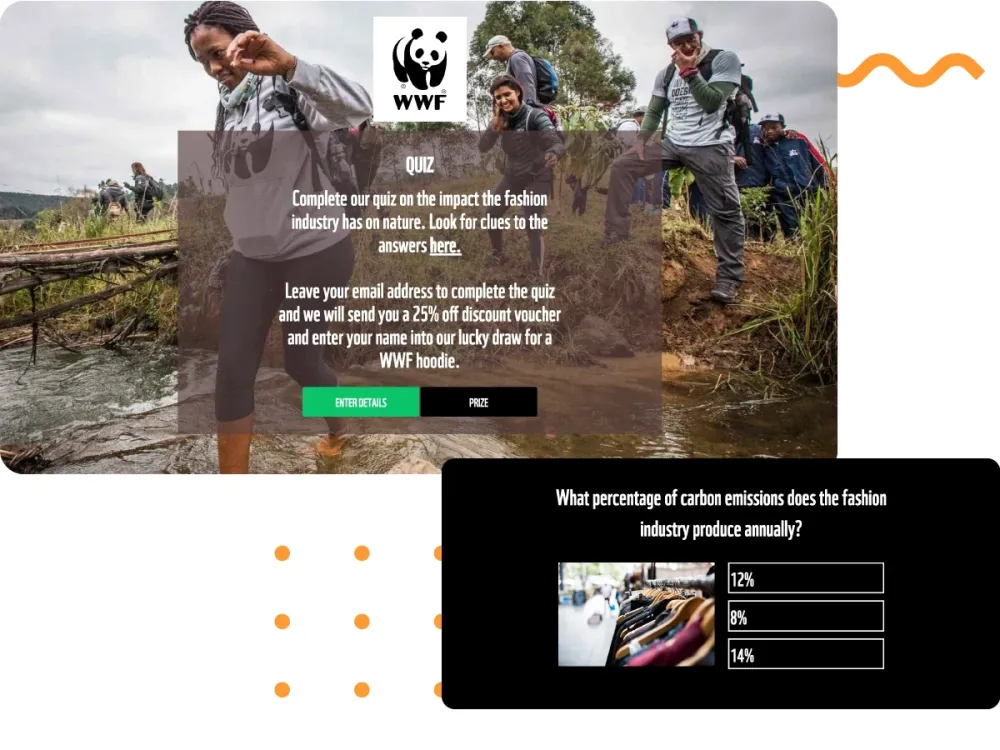
- 2,171 unique visitors: strong interest from their target audience.
- 1,065 unique participants: a player only counts once, no matter how many times they play.
- 49% conversion rate: from interested visitors to participants.
The Benefits of Gamification Marketing for NGOs
Gamification isn’t a magic wand. But used well, it offers real, measurable advantages.
1. Higher Engagement
Static content is easy to ignore. Add game elements like quizzes, polls and challenges, and you move from telling to involving. People stay longer when they’re playing.
2. Better Learning and Recall
Complex issues like climate change or human rights can feel abstract. Interactive formats make them concrete, so they’re more likely to stick.
3. Stronger Lead Generation
When people take part, you can collect opt-ins, preferences and behavioural data. That’s how you build smarter campaigns in the future. See how Scratcher supports lead generation.
4. More Donations
Gamification uses motivators like progress, streaks and social recognition. They nudge people closer to action, whether that’s a one-off gift or a recurring donation.
5. Community Activation
Leaderboards and social sharing aren’t just fun. They create visibility. Gamified experiences are built to be talked about, shared and played again, which helps your message travel further.
How to Get Started
You don’t need a big budget or a development team. A few ideas that suit NGOs well:
- Educate with a quiz. Turn the facts about your cause into questions. People learn more when they have to guess.
- Ask for opinions. A poll or survey shows supporters you value their views and tells you what matters to them.
- Make the first step small. Ask for an email and permission before you ask for a donation. Then follow up with stories and impact.
- Reward taking part. Prizes don’t have to be expensive. Merchandise, a partner discount or a thank-you from the people you help can be enough.
For more inspiration, see how WWF Denmark learned that donations don’t start with donations, how MS Forbundet increased donations with gamification and how Red Barnet’s campaign became a huge success. Our article on gamification strategy for NGOs goes deeper into planning.
So Why Aren’t More NGOs Doing This?
Because many still think of “games” as frivolous. That’s outdated thinking.
Gamification marketing isn’t fun for fun’s sake. It’s strategic design that gets your message through in a distracted world. For NGOs, it’s not just a better way to communicate. It’s a smarter way to mobilise.
The organisations that thrive tomorrow will be the ones that rethink how they engage today. Find out why organisations choose Scratcher, or start your free 14-day trial.