


In einer Zeit, in der Automarken mit sinkender Aufmerksamkeit, zersplitterten Customer Journeys und strengeren Datenschutzregeln kämpfen, hat Toyota Dänemark in aller Stille eine der wirksamsten First-Party-Daten-Maschinen im europäischen Automobilmarketing aufgebaut. Das Rückgrat dieser Maschine? Eine langjährige Zusammenarbeit mit Scratcher, angelegt nicht als kurzfristiger Verkaufsgag, sondern als dauerhaftes, einwilligungsbasiertes Wachstumssystem.
Über Toyota Dänemark
Toyota Danmark A/S ist seit 1963 auf dem dänischen Markt aktiv und bietet über ein umfangreiches Händlernetz eine breite Palette an Hybrid-, Elektro- und konventionellen Fahrzeugen an. Bekannt für seine hohe Kundentreue und seinen Fokus auf Innovation, gehört Toyota Dänemark nach wie vor zu den führenden Automarken des Landes.
Diese Fallstudie entstand in enger Zusammenarbeit mit Martin Madsen-Mygdal, Senior Marketing Automation Consultant und Partner bei POPULATE, und dem Marketingteam von Toyota und verbindet strategische Automatisierung, Datenarchitektur und kommerzielle Aktivierung in einem integrierten Wachstumsmodell.
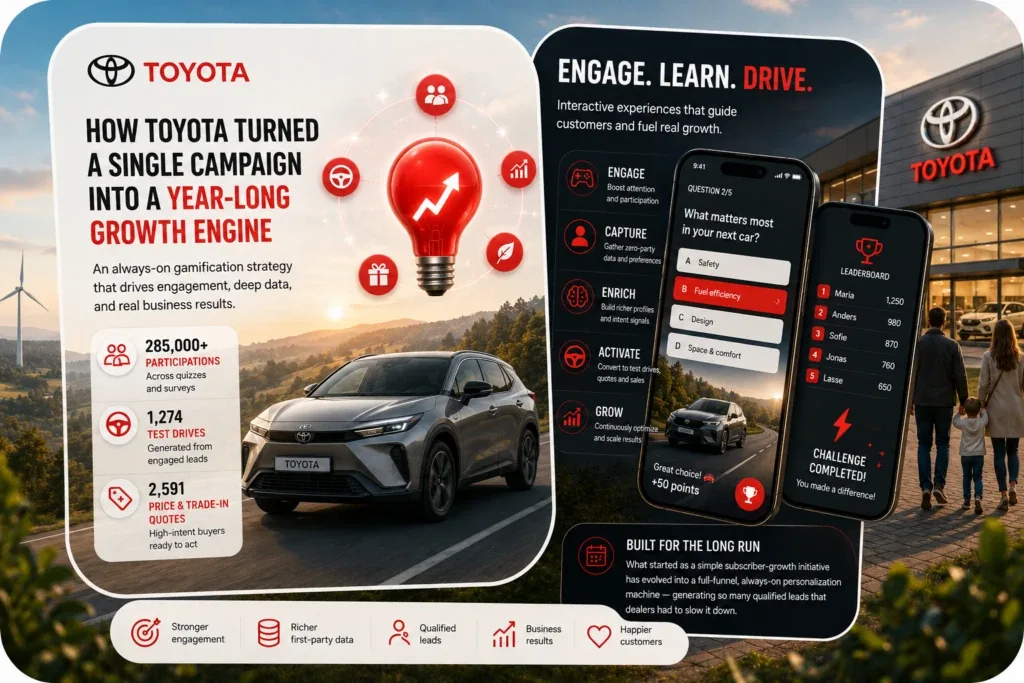
Was vor Jahren als einfache Initiative zur Gewinnung von Abonnenten begann, hat sich zu einer Always-on-Personalisierungsmaschine über den gesamten Funnel entwickelt – einer Maschine, die so viele qualifizierte Leads erzeugen kann, dass die Händler sie bremsen mussten.
Die Ergebnisse: Die Kampagne brachte starkes Engagement und messbare kommerzielle Erfolge. Insgesamt erzeugte das Erlebnis mehr als 285.000 kumulierte Interaktionen mit Quiz und Befragungen über fünf Kontaktpunkte (gezählt wurden alle Teilnahmen, nicht einzelne Personen). Jede Interaktion ermöglichte eine deutliche Datenanreicherung, da jeder Schritt tiefere Einblicke in Kundeninteressen, Fahrzeugbesitz und Kaufabsicht lieferte.
Über das Engagement hinaus hatte die Kampagne eine klare Wirkung im unteren Funnel, darunter mehr als 1.274 Probefahrt-Aktionen und 2.591 Anfragen für Preis- und Inzahlungnahme-Angebote, die den Toyota-Händlern einen stetigen Strom an Leads mit hoher Kaufabsicht lieferten.
Zusammen ermöglichten der Umfang der Teilnahme und die Tiefe der gesammelten Zero- und First-Party-Daten es Toyota, die Folgekommunikation zu personalisieren und Engagement mit der Zeit in qualifizierte Nachfrage umzuwandeln.
Von der Einwilligung zum Kauf: von „Gewinne ein Auto“ zu eigenem Kundenwissen
Auf den ersten Blick wirkt die Kampagne vertraut: Quiz, Gewinnspiele und die Chance, einen brandneuen Toyota zu gewinnen – vollständig bezahlt, inklusive Steuern. Die eigentliche Stärke liegt aber unter der Oberfläche.
Die Teilnehmer nehmen nicht einfach an einer Verlosung teil. Sie machen bei lehrreichen Quiz mit, die Elektrofahrzeuge, die wichtigsten Alleinstellungsmerkmale von Toyota und echte Fragen rund um den Fahrzeugbesitz erklären. Jede Interaktion beruht vollständig auf Einwilligung, und jede Antwort wird zu einem aussagekräftigen Signal. Mit der Zeit hat Toyota diesen Aufbau zu einer ausgefeilten First-Party-Daten-Maschine weiterentwickelt, die angegebene Absichten, Verhaltensdaten und Informationen zum Fahrzeugbesitz in großem Umfang kombiniert. Heute hat dieses jährlich wiederkehrende Kampagnenkonzept Toyota geholfen, fast 175.000 Abonnenten mit Einwilligung in Dänemark aufzubauen – das Rückgrat seines personalisierten Marketings.
Die Kampagne selbst folgt einer klaren Reise in drei Schritten:
- Einwilligungen sammeln
- Verbraucher informieren und dabei Daten anreichern
- Interesse in Umsatz verwandeln
Sie beginnt mit einwilligungsbasierter Gewinnung, die 21.226 neue E-Mail-Einwilligungen brachte und viel Traffic auf die eigenen Kanäle von Toyota lenkte: 141.823 Besucher und 252.879 Seitenaufrufe auf toyota.dk.
Von dort gingen sowohl neu gewonnene als auch bestehende Toyota-Abonnenten in ein gamifiziertes Lernerlebnis über, das informieren und Daten sammeln sollte. Über fünf Gewinnspielmodule hinweg füllten 22.352 Teilnehmer die abschließende Befragung aus und lieferten umfangreiche Zero-Party-Daten.
Martin erklärt: „Wir schauen, welche Absichten sie haben, wie sie sich verhalten und wofür sie sich interessieren, und dann schicken wir ihnen personalisierte E-Mails.“
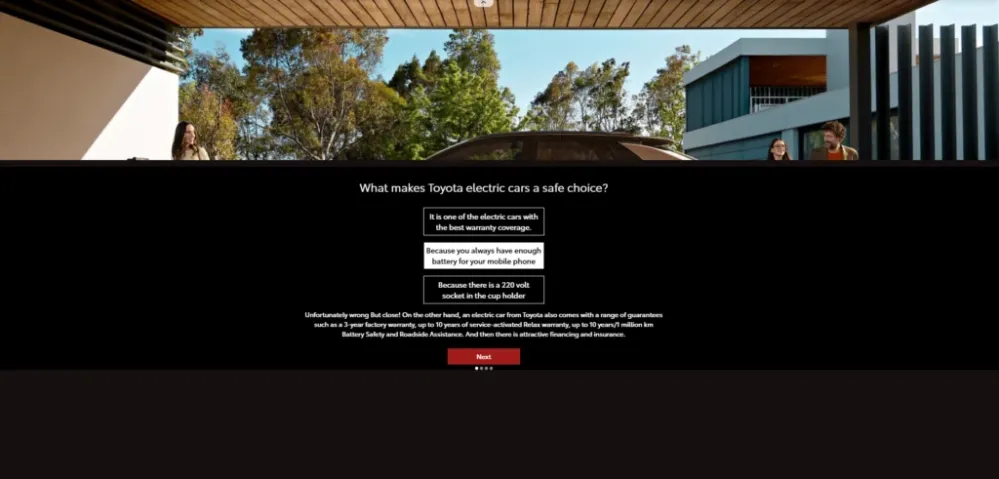
Die Erfassung von 19.439 gültigen Kennzeichen zeigte, dass 50 % der Teilnehmer keine Toyota-Besitzer waren – ein Beleg dafür, dass die Kampagne ganz neue potenzielle Käufer anzieht und sie wiederholt mit Botschaften zum Yaris und zu den Hybridmodellen von Toyota erreicht.
Schließlich verwandelte die Kampagne Engagement in messbare kommerzielle Wirkung. Personalisierte, verhaltensbasierte E-Mail-Flows brachten starke Ergebnisse im unteren Funnel und trugen direkt zu 768 Fahrzeugverkäufen bei, die der Kampagne zugeordnet werden.
Allein der E-Mail-Traffic auf toyota.dk brachte 823 Inzahlungnahme-Leads und 92 Probefahrtbuchungen, während bei den Händlern weitere Conversions hinzukamen, darunter 63 Vorbestellungen der Yaris Premier Edition, 108 private Showroom-Termine, 440 absolvierte Probefahrten und 1.021 individuelle Angebote. Während in den ersten drei Monaten nach dem Marktstart insgesamt über 4.000 Yaris verkauft wurden, stehen diese Zahlen für Verkäufe, die direkt der Kampagne und ihrer First-Party-Datenaktivierung zugeordnet werden können.
E-Mail als der am besten zu verteidigende Kanal im Mix
In einer Medienlandschaft unter ständigem Budgetdruck ist diese Kampagne unantastbar geworden.
Rund 35 % aller Toyota-Verkäufe in Dänemark lassen sich per E-Mail direkt dieser Datenbank mit Einwilligungen zuordnen. Der tatsächliche Einfluss ist wahrscheinlich deutlich größer, aber Toyota hat sich bewusst für eine vorsichtige Zuordnung entschieden und beansprucht einen Beitrag zum Verkauf, nicht den Verkauf selbst.
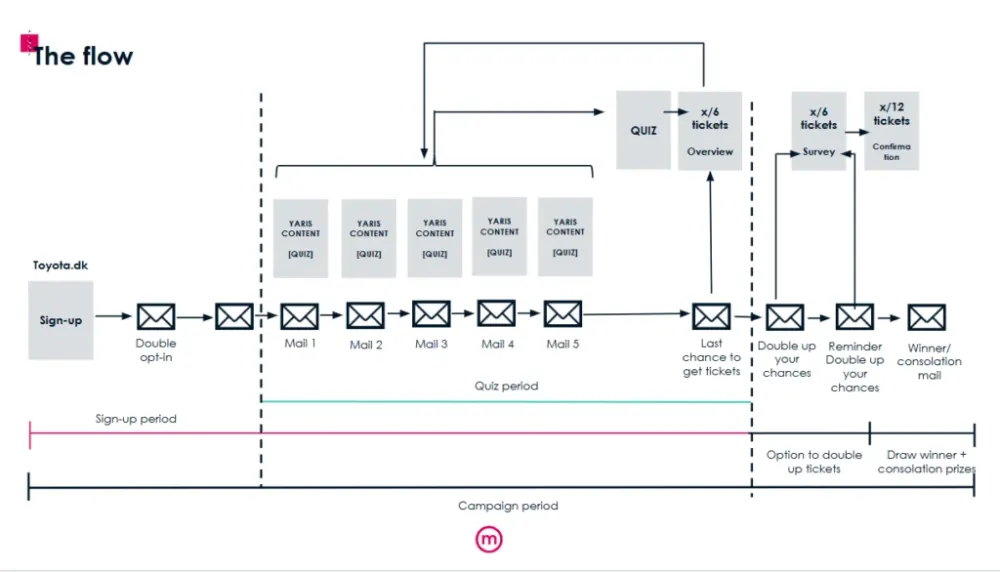
Jede Woche wurde eine E-Mail mit folgenden Inhalten verschickt:
- Informationen zum neuen Yaris
- Welcher Wochengewinn durch die Teilnahme am wöchentlichen Gewinnspiel gewonnen werden konnte
- Eine Übersicht aller gesammelten bzw. noch erhältlichen Lose
Während andere Kanäle gekürzt werden, bleiben E-Mail und First-Party-Aktivierung geschützt. Warum? Weil die Wirkung messbar, zuordenbar und von den Händlern bestätigt ist.
First-Party-Daten, die wirklich konvertieren
Was diesen Fall besonders macht, ist nicht das Gewinnspiel selbst, sondern wie die Daten über die Zeit aktiviert werden.
Durch die Kombination von Quizantworten, Erkenntnissen aus Befragungen und selbst angegebenen Fahrzeugdaten – etwa Besitzstatus, bevorzugter Antrieb, Leasingverhalten und Alter des Autos – kann Toyota:
- Erkennen, welche Kunden heute noch nicht kaufbereit sind
- Verstehen, wie ihre aktuelle Situation und Absicht aussieht, einschließlich des Interesses an Hybrid-, Elektro- oder klassischen Antrieben
- Vorhersagen, wann sie voraussichtlich bereit sind zu kaufen oder zu leasen
- Auslösen, dass genau zum richtigen Zeitpunkt eine personalisierte Ansprache erfolgt, wenn sich die Umstände ändern
Ein Kunde mit einem langfristigen Leasingvertrag bekommt keine generischen Verkaufsbotschaften. Toyota weiß, wann sich ein Ausstiegsfenster öffnet, und reagiert mit maßgeschneiderter Kommunikation zu Optionen, Anreizen und Inzahlungnahme – genau dann, wenn es relevant ist.
Das ist Geduld, angetrieben von Daten.
Wenn die Nachfrage zum Engpass wird
Die Kampagne lief so gut, dass der Erfolg operativ zur Herausforderung wurde.
Sowohl 2024 als auch 2025 musste Toyota die Auslieferung der Leads drosseln und Conversions in Etappen freigeben, damit die Autohäuser in den Hochsommermonaten nicht überlastet wurden. Bei voller Auslastung konnte die Aktion bis zu 800 qualifizierte Kundenleads pro Tag erzeugen – ein seltenes Problem in einem Markt, in dem die meisten Autohersteller Mühe haben, den oberen Teil des Funnels zu füllen.
Martin sagt dazu:
„Zu viele Leads zu haben, ist eine sehr ungewöhnliche Situation. Alle anderen schreien nach Kunden.“
Entscheidend ist, dass Toyota nicht blind der Menge hinterherjagte. Durch angepasste Botschaften und Mechaniken tauschte die Marke bewusst Quantität gegen Qualität und stellte so sicher, dass die Leads aus den Gewinnspielen kommerziell relevant blieben.
Das Ergebnis?
- Conversion-Rate der Standardanfrage „Angebot anfordern“: ~9 %
- Conversion-Rate der Leads aus Gewinnspielen: ~7 %
Eine Kampagne. Zwölf Monate Wirkung.
Die vielleicht auffälligste Erkenntnis ist struktureller Art.
Toyota betreibt nicht Dutzende unverbundene Maßnahmen zur Leadgenerierung. Stattdessen baut die Marke eine große jährliche Kampagne und nutzt die gewonnenen Daten dann das ganze Kalenderjahr über für personalisierte Kommunikation, Produkteinführungen und Händler-Traffic, bis der Zyklus von vorn beginnt.
In einer Branche, die für Komplexität und ständig wechselnde Kampagnen bekannt ist, ist dieser Fokus radikal.
Und er funktioniert.
„Man muss eigentlich nicht viele Kampagnen bauen. Wenn man eine Kampagne richtig macht, kann man ihre Daten das ganze Jahr nutzen.“ — Martin Madsen-Mygdal, Senior Marketing Automation Consultant und Partner bei POPULATE
Ergebnisse
- 285.000+ Teilnahmen an Quiz und Befragungen
- 1.274 Probefahrten
- 2.591 Anfragen für Preis- und Inzahlungnahme-Angebote
Die größere Lektion für Marketer
In diesem Fall von Toyota × Scratcher geht es darum, Einwilligungen zu verdienen, das richtige Timing zu respektieren und First-Party-Daten die Hauptarbeit machen zu lassen.
Er beweist:
- Du brauchst keine endlosen Kampagnen, wenn eine richtig aufgebaut ist
- Aufklärung kann harten Verkauf übertreffen
- Eine langfristige Datenstrategie schlägt kurzfristige Attributionsspiele
In einer Welt ohne Cookies sieht nachhaltiges Automobilmarketing so aus.
Und für Toyota ist aus einer einzigen Idee einer der zuverlässigsten Wachstumsmotoren der Branche geworden.