
















How a Christmas calendar campaign works
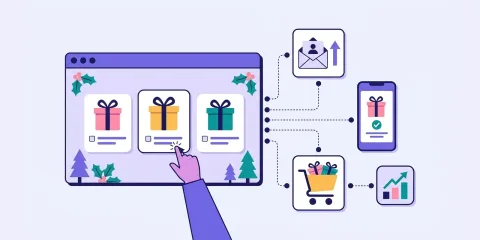
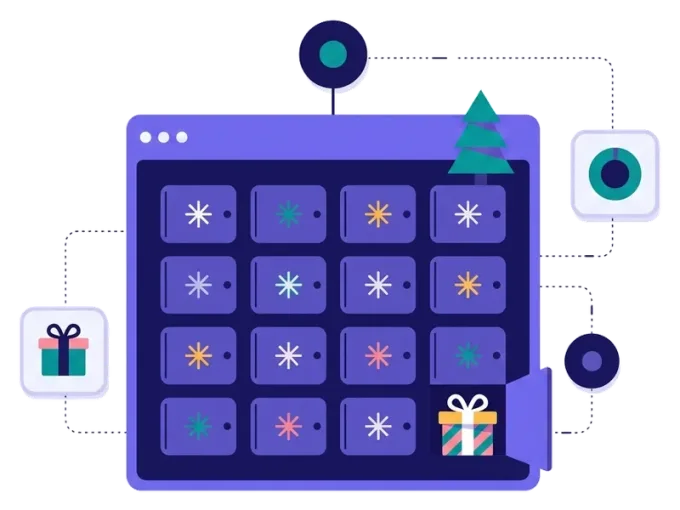
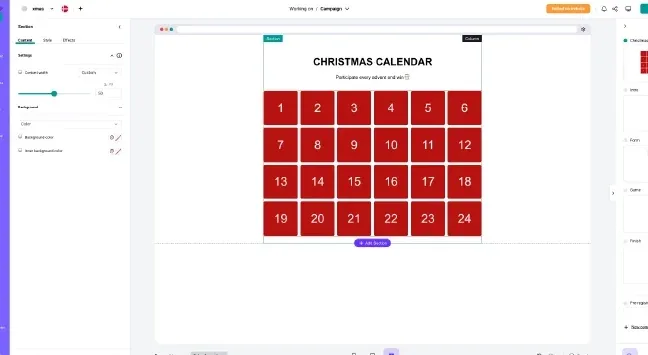
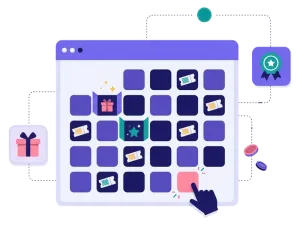
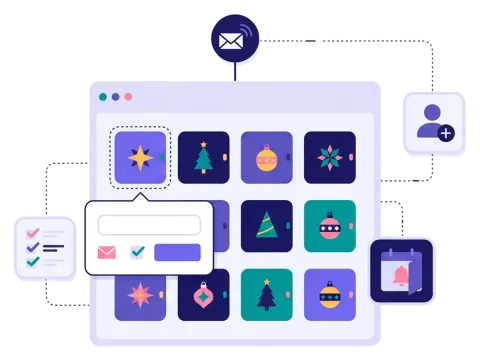
An online Christmas calendar works just like the paper calendar most of us grew up with. There are 24 doors, and one opens each day from 1 to 24 December. When people open today's door, they find a game, an offer or a prize draw.
The first time people visit, they fill in a short form — often just a name and an email — and accept your newsletter. After that, they come back each day to open the next door. Turn on auto-submit, and returning players don't have to fill in the form again, so it only takes one click to play.
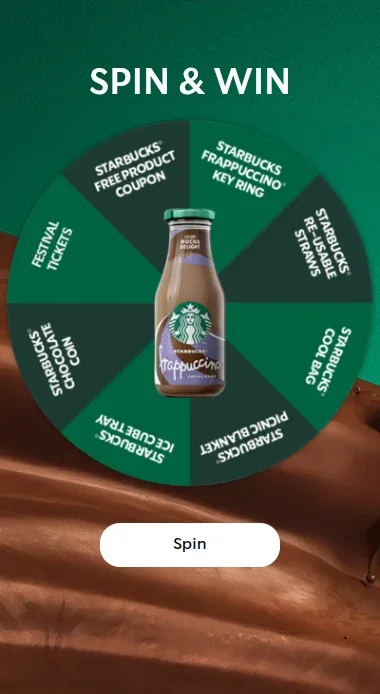
You decide what happens behind the doors. Many brands use the same simple game every day, like a scratch card or a spin the wheel. Others put a quiz behind each door with a question about their products. You can also give everyone who plays an entry into a grand prize draw on Christmas Eve.
When to use a Christmas calendar
December is the month where everybody fights for attention. A Christmas calendar gives you a daily reason to be in front of your customers, without sending the same discount again and again. It works well when you want to:
- Grow your newsletter list before the January sales.
- Keep people coming back to your website or webshop all month.
- Teach people about your products with a daily question.
- Sell more with daily deals and discount codes.
- Thank loyal customers with small gifts every day.
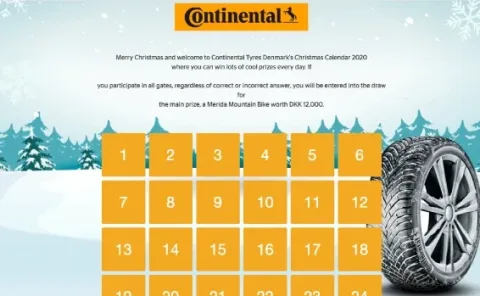
It works for almost any industry: retail and webshops, food and drinks, travel, utilities, car brands, B2B companies and charities. Continental used one to reach its dealers and grew its B2B newsletter by 130%, and WWF Denmark runs a Christmas calendar every year because, in their words, it really works.
5 ideas for your Christmas calendar
- The classic daily prize: the same scratch card every day, with a new prize behind each door.
- The product quiz: one question a day about your products, with a grand prize for everyone who answered.
- Daily deals: a new discount code every day that people can use in your webshop.
- The countdown to a big prize: small prizes during the month and one big prize drawn on the 24th.
- The good cause: a charity or brand calendar where each door shares a story, a tip or a way to help.
Need more inspiration? Read our Christmas campaign ideas and the online Christmas calendar guide.
Tips for a Christmas calendar that converts
Tip #1: Start early
A Christmas calendar has more moving parts than a single game. Start planning in good time, so you can test everything before 1 December.
- Decide on one main goal — sign-ups, sales or engagement.
- Pick your prizes and dates early.
- Let people sign up before launch with a pre-registration page and a countdown.
Tip #2: Keep the game simple
A new game every day sounds fun, but it is more work for you and harder for players. One game that fits your goal is often enough.
- Use a luck game for quick daily visits.
- Use a quiz when you want people to learn about your products.
- Use Rex, our AI assistant, to write questions and texts faster.
Tip #3: Make the prizes worth a daily visit
You don't need expensive prizes every day. Small daily prizes plus one big prize on the 24th keep people coming back.
- Mix free products, discount codes and a few bigger prizes.
- Spread the prizes over the whole month, not just at the end.
- Set up everything once in prizes and let it run.
Tip #4: Remind people every day
Most people need a nudge to come back. Send a short reminder when a new door opens.
- Send reminder emails from Scratcher (Email module, included on Professional or as an add-on) or from your own email tool.
- Show the calendar as a pop-up on your website.
- Share the daily door on social media.
Tip #5: Follow up in January
The calendar ends on the 24th, but your new subscribers don't. Send a welcome email, use what you learned about them and plan your next campaign.
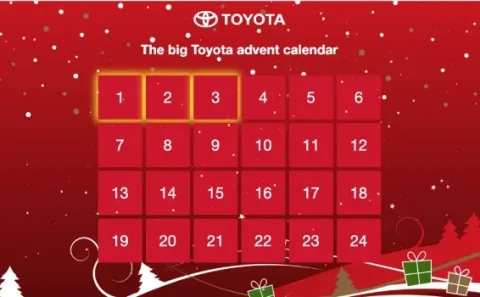
Want to see what's possible? Read how Toyota's Christmas calendar got 450,375 opened doors, with the average player coming back on 18 of the 24 days.