














Skip to content

Rex, your AI assistant: the busywork, handled. The ideas, yours 👉 Meet Rex

Memory game
Skill game format

Memory game

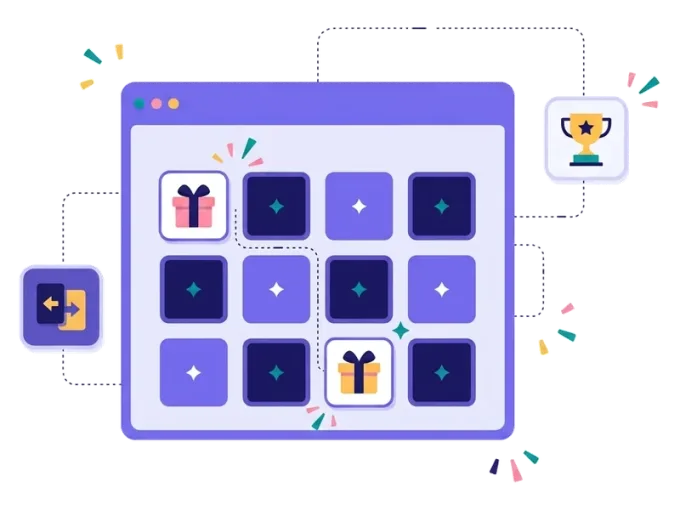
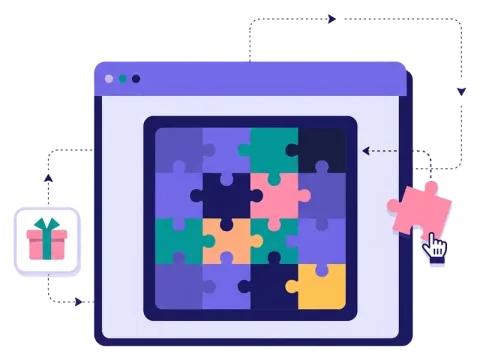
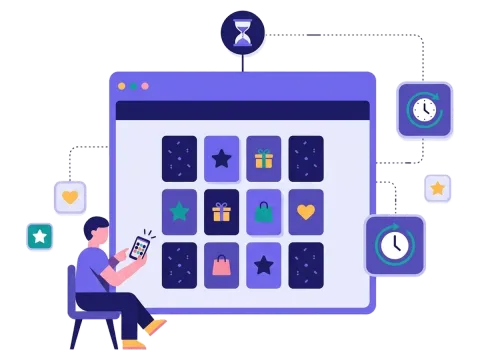
The classic card game, now with your brand on every card. In this online memory game, people flip the cards and find the matching pairs to win a prize. It keeps players with you for longer than most games — and every pair they turn over shows them your products.

Used by brands like Burger King, Toyota and WWF

Burger King Starbucks Toyota POWER Sport24 Wolt WWF nemlig.com Skoringen Anthon Berg Change Lingerie Fleggaard Uno-X
About the format

About the memory game

Almost everyone has played memory as a child, so nobody needs to read the rules. Players fill in a short form, flip two cards at a time and try to find all the matching pairs. When the board is cleared, they see if they've won.

Because people have to look closely at every card, a memory card game is a great way to show off products, teach something about your brand or simply give people a fun break. You put your own pictures on the cards, choose how many pairs there are and decide how hard it should be.

  • Your own pictures on every card

  • Choose 2 to 10 pairs and the number of columns

  • Add a time limit or a maximum number of moves

  • Works on phones and computers

About the memory game

AffaldPlus' Easter memory game taught people how to sort waste

1662

unique visitors

1084

unique participants

65%

conversion rate


How it works

Make your memory game in four simple steps

1
Create your account

Sign up for free in under a minute. No credit card, nothing to install.

2
Find a template

Pick a ready-made memory game template, or ask Rex, our AI assistant, to suggest one for your goal.

3
Design it with AI

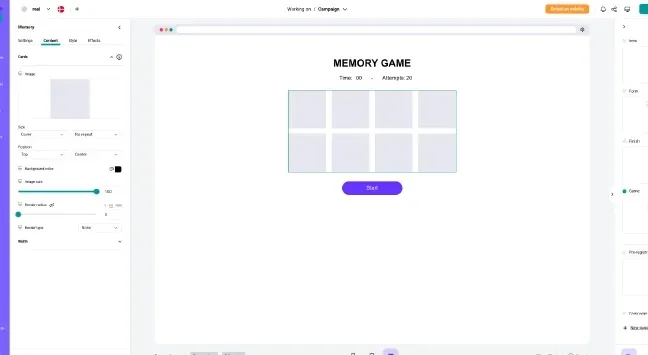
Rex adds your logo, colours and fonts from your website and writes the texts. Adjust anything with drag and drop.

4
Share it

Publish it as a landing page, pop-up or embed, and let Rex write the posts for your social media.


More skill games

Other similar game concepts

Like the memory game? These skill games are just as easy to play.

Why a memory game

Why brands love the memory game

People stay longer
People stay longer

Finding every pair takes a little while, so players spend real time with your products and your brand.

Read more: People stay longer

Great for teaching
Great for teaching

Match a product with its use or a question with its answer. People learn something while they play.

Read more: Great for teaching

Prizes that pay back

Give out discount codes or enter players into a draw, and turn a fun game into new customers.

Read more: Prizes that pay back


How a memory game campaign works

A memory game is one of the simplest skill games you can run. The cards lie face down on the screen. Players turn over two cards at a time. If the pictures match, the pair stays open. If not, the cards flip back, and the player has to remember where they were. When all the pairs are found, the game is over.

In a campaign, you usually add a short sign-up form before the game starts. People give their name and email, and perhaps tick a box to get your newsletter. Then they play. When they finish, they see a message, a prize or an entry into a draw. You decide what happens.

You can make the game easy or hard. Use fewer pairs for a quick game on a phone, or more pairs for people who like a challenge. Add a time limit or a maximum number of moves if you want only the best players to win. Your own pictures go on the cards, and the back of each card can show your logo or a seasonal pattern.

When to use a memory game

The memory game works best when you want people to look closely at something. That makes it a good fit for:

  • Product launches: put your new products on the cards, so people see them again and again.
  • Education: match a material with the right bin, a symptom with a tip, or a word with a picture. AffaldPlus used a memory game at Easter to teach people how to sort their waste, and 65% of visitors took part.
  • Seasonal campaigns: Easter, summer, Halloween and Christmas all work well with themed cards.
  • Advent and Christmas calendars: a memory game behind one of the doors gives people something different to do on that day.

It suits retail, food and drink, travel, utilities, NGOs and the public sector — anyone who has something to show or explain.

5 ideas for your memory game

  1. Match the product: show your bestsellers on the cards. Winners get a discount code for one of them.
  2. Sort it right: pair items with the right category, like AffaldPlus did with waste sorting.
  3. Dream destinations: a travel brand can match places with their landmarks and give away a trip in a draw.
  4. Meet the team: match staff photos with their names — a fun idea for an internal campaign or a local shop.
  5. Seasonal special: an Easter or Christmas version with themed cards and a small prize for everyone who finishes.

Tips for a memory game that converts

Tip #1: Keep the board small on mobile

Most people play on their phone. A board with 6 to 8 pairs is easy to see on a small screen and still takes enough time to be fun.

  • Choose pictures that are clear and easy to tell apart.
  • Use big cards rather than many tiny ones.
  • Test the game on your own phone before you go live.

Tip #2: Ask for the sign-up before the game

People are most curious just before they play. Put a short form in front of the game, and only ask for what you will use. An email and a newsletter permission are often enough. Read more about lead generation with games.

Tip #3: Give everyone a reason to finish

A memory game takes a little effort, so make the reward clear from the start.

  • Show the prize on the start page.
  • Give a small prize, like free shipping, to everyone who clears the board.
  • Enter all finishers into a draw for a bigger prize. Scratcher can pick the winners for you.

Tip #4: Use the time limit wisely

A time limit adds excitement, but it can also make people give up. If your goal is sign-ups, keep it generous. If you want a real competition, make it tighter and let people try again.

Tip #5: Share it where your audience already is

Send the game to your newsletter list, show it as a pop-up on your website or share it on social media. In a store, a poster with a QR code works well.

Tip #6: Look at the numbers and follow up

When the campaign ends, check how many people took part and how many signed up. Then send a welcome email to your new subscribers while the game is still fresh in their mind.

Want something with a bit more action? Try the drop game or a puzzle game. For more inspiration, read about AffaldPlus and four other Easter campaigns.
Questions

Questions about the memory game

Book a meeting
  • The cards lie face down. Players turn over two at a time and try to find all the matching pairs. When the board is cleared, they see the result and any prize.

  • Yes. You choose the prizes and how many there are. You can give a prize to everyone who finishes, use a time limit or a move limit, or pick winners in a draw.

  • Yes. Put your own pictures on the cards and add your logo, colours and fonts. You can also start from a template and change it in the editor.

  • On its own landing page, as a pop-up on your website or embedded on any page. You can also share the link in newsletters, on social media or with a QR code.

  • Yes. You decide what you ask for in the form, add your own consent text and choose when the data is deleted. Scratcher is ISO 27001 certified.

Works with Shopify and Klaviyo

Send sign-ups to Klaviyo, HubSpot, Mailchimp and 17 other native integrations, and track orders and revenue in Shopify.

See integrations

From €399 a month

Billed monthly or yearly, same price. Try it free for 14 days, no credit card needed.

See pricing

Why not a free plugin?

A plugin gives you one wheel in one shop. Scratcher gives you 40+ formats for your site, emails, social media and stores, with consent, prize codes and results in one place.

For agencies

Agency mode: one login for every client, each with their own account, brand and results.

Scratcher for agencies